▫️ Your Servers Now Last Six Years. Nobody Told the Servers.
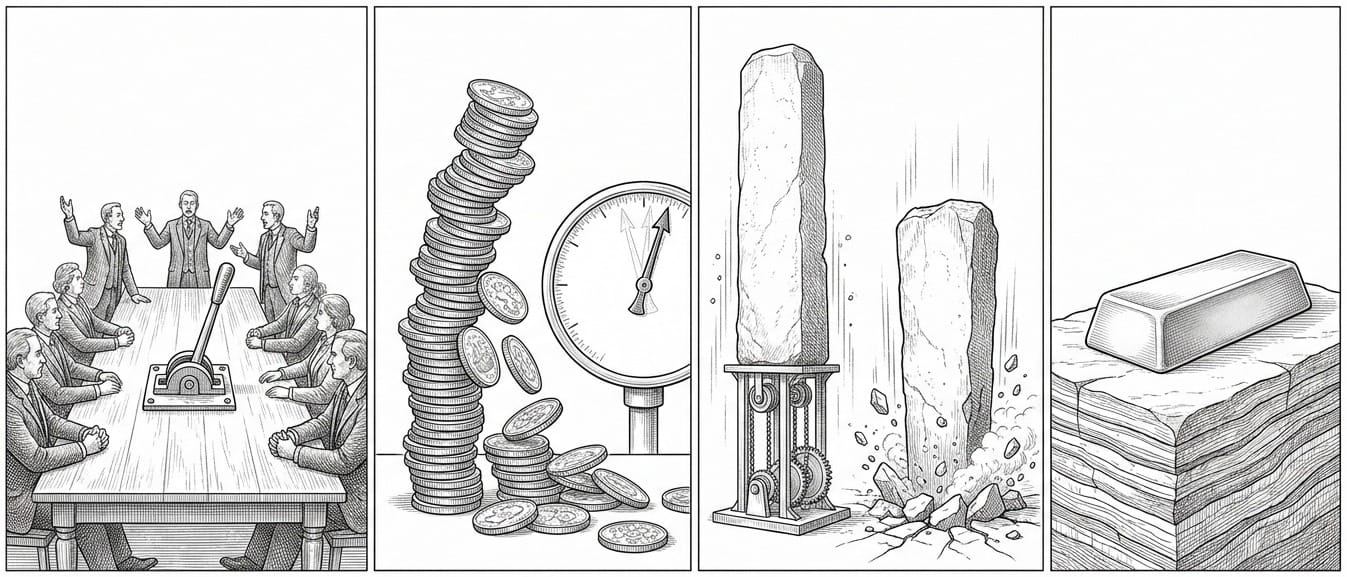
Equipment ages at a physical rate, while the schedule that writes it down is set by management.

▫️ THE CORE TOPIC
When a company buys equipment, it does not take the cost against profit all at once. The cost is spread across the years the equipment is expected to serve, and that expected period is called its useful life.
Here is what most readers never register: that number is an estimate made by management. Stretch it and reported profit rises immediately, because the same spending is divided across more years. Across the industry, assumed server lives have drifted from three or four years out to five or six as capital spending exploded. In early 2023 Alphabet extended the useful life of its servers from four years to six, cutting its 2023 depreciation by $3.9 billion and lifting earnings by about $3 billion. Not one machine became more durable that day.
The distinction matters because equipment ages at a physical rate no accountant can vote on. Cash left the business when the hardware was bought. Everything after that is arithmetic about timing, and warnings about this buildout come down to whether that arithmetic holds.
▫️ THE MECHANISM
The useful life assumption moves through a business in a few steps.
- Spending becomes an asset first. Cash goes out the door immediately, but the income statement records only a slice each year, so profit and cash flow separate from the moment of purchase.
- The estimate is a judgement call. Management sets the schedule and revises it. A longer life means a smaller annual charge, which means higher reported profit with no change in operations.
- Obsolescence ignores the schedule. Hardware is replaced when something faster arrives, not when the depreciation table says it is finished. In fast-moving equipment the two can diverge badly.
- The correction arrives at once. When reality asserts itself, the adjustment lands as a write-down in a single period rather than gradually, which is why balance-sheet trouble tends to surface abruptly rather than gently.
Depreciation does not describe wear. It describes a decision about wear.
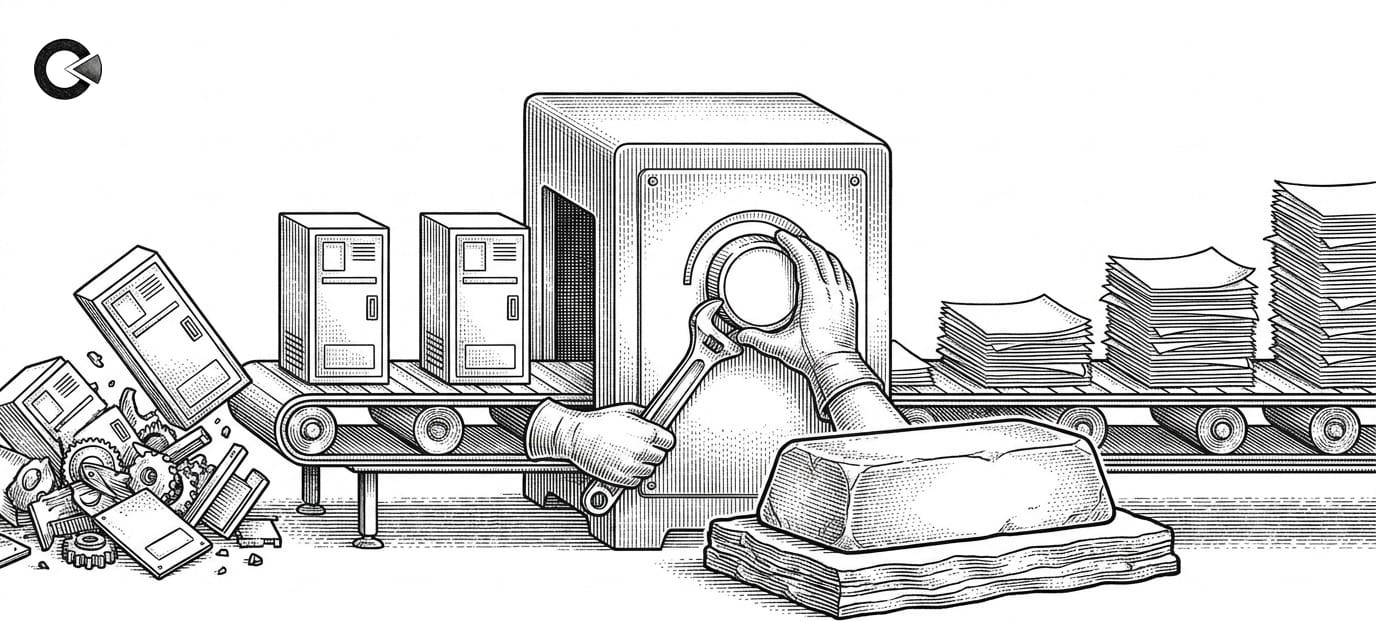
▫️ THE CASE FILE
The definitive lesson came from WorldCom, once America's second-largest long distance carrier. Its problem was the boundary between an expense and an asset.
Ordinary operating costs, the fees it paid other carriers to route calls, belonged on the income statement immediately. Instead the company moved roughly $3.8 billion of those costs into capital accounts, where they would be written off slowly over future years. Reported profit looked healthy while cash told a different story.
The disclosure came in June 2002, and the SEC charged the company with fraud. WorldCom filed for bankruptcy the following month, the largest in United States history at that time. The costs had always been real. Only their timing had been rearranged.
▫️ THE PRESSURE TEST
- Longer lives are often honest. Equipment genuinely does last longer than it used to, and firms must revisit the estimate as evidence changes.
- The change is disclosed. Revisions appear in filings for anyone willing to read the notes, so this is a matter of attention, not concealment.
- Cash flow is not immune. Operating cash flow sidesteps depreciation, but heavy spending still surfaces in free cash flow.
- Every long-lived asset has this issue. Factories, pipelines and ships all carry estimated lives. Fast-moving equipment just shows the gap.
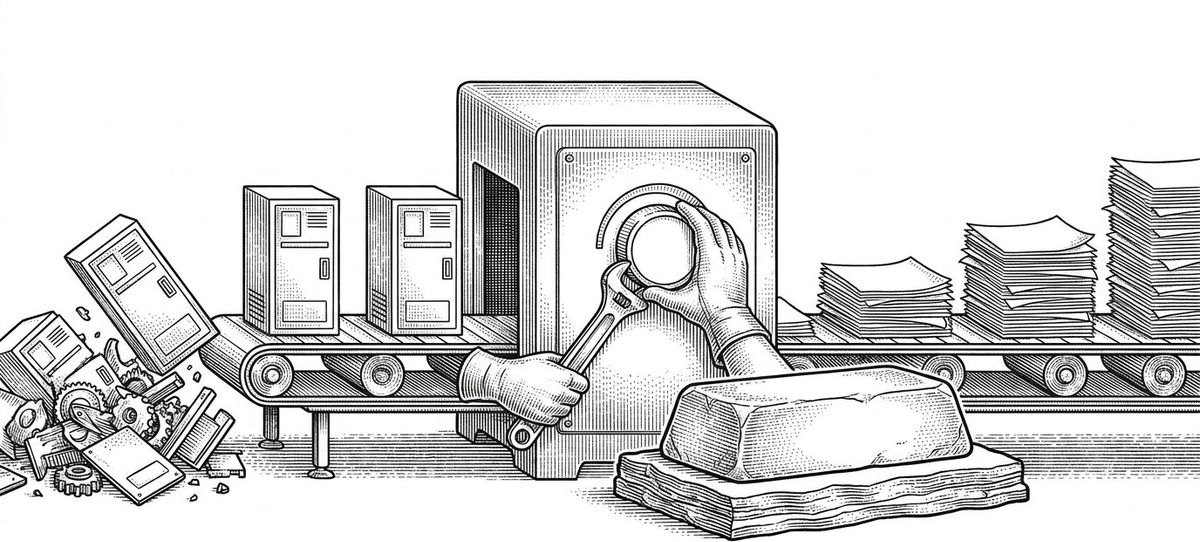
The way through is to prefer things whose worth needs no schedule. An ounce of gold has no useful life, no depreciation table and no estimate to revise. It is the same asset in year one and year fifty.
▫️ AUTHOR'S LENS
I learned to read the notes before the headline number, because that is where the assumptions live. A single sentence about revised useful lives can be worth more than an entire quarter of commentary, and it is usually printed where nobody looks.What I hold at the centre has no such sentence attached to it. Metal does not wear out, cannot be reclassified, and needs no committee to decide how long it will keep working. That is a quiet advantage, and it compounds over decades.Build the structure. Ignore the noise. |  |
▫️ PAST ISSUES