▫️ Why the AI Trade Has Become the New Single Point of Failure
When the failure point is one company instead of one bank, the channels are the same. Only the names change.
▫️ THE CORE TOPIC
For most of investment history, individual company failures stayed individual. A factory closed, a bank went bust, a stock went to zero. The damage was contained. The wider system kept working.
That model broke decisively in 2008 and is being tested again now. US equity market capitalization stands at roughly twice US GDP, higher than at the peak of the dot-com bubble. Roughly one quarter of the S&P 500 sits in a handful of names tied to the AI build-out. One newsletter warns a meltdown in the most important AI company could be ten times larger than Lehman Brothers, and the same source urges gold exposure as a structural hedge.
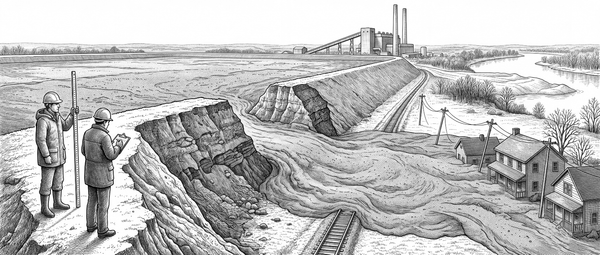
The structural driver is interconnection. When balance sheets, collateral chains, and trading positions link the largest names to everything else, an isolated failure can no longer stay isolated.
▫️ THE MECHANISM
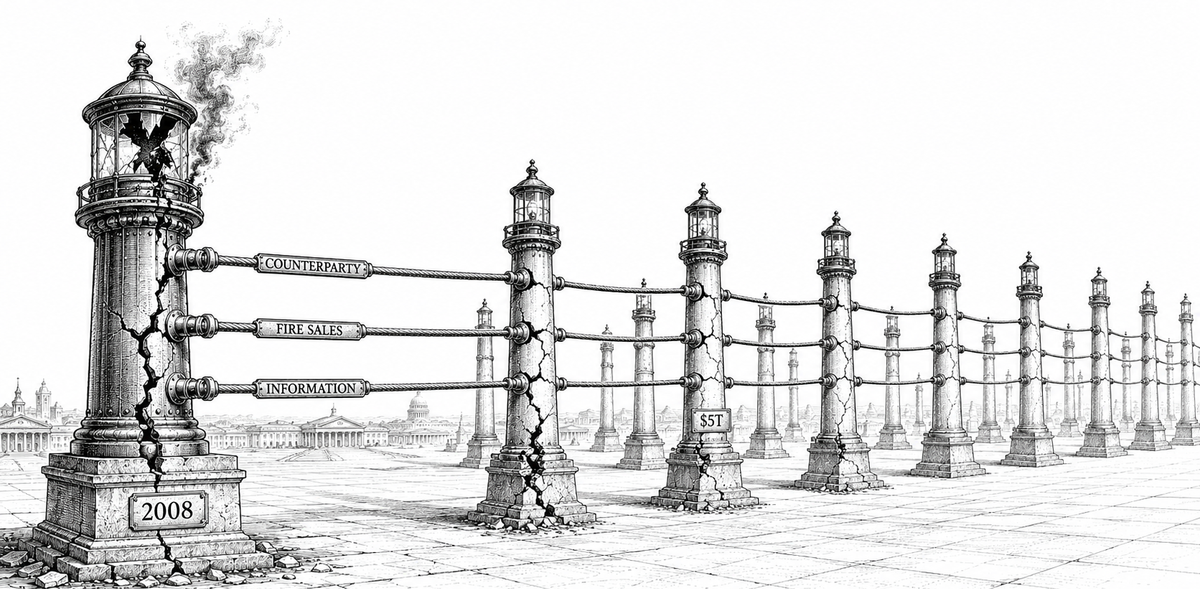
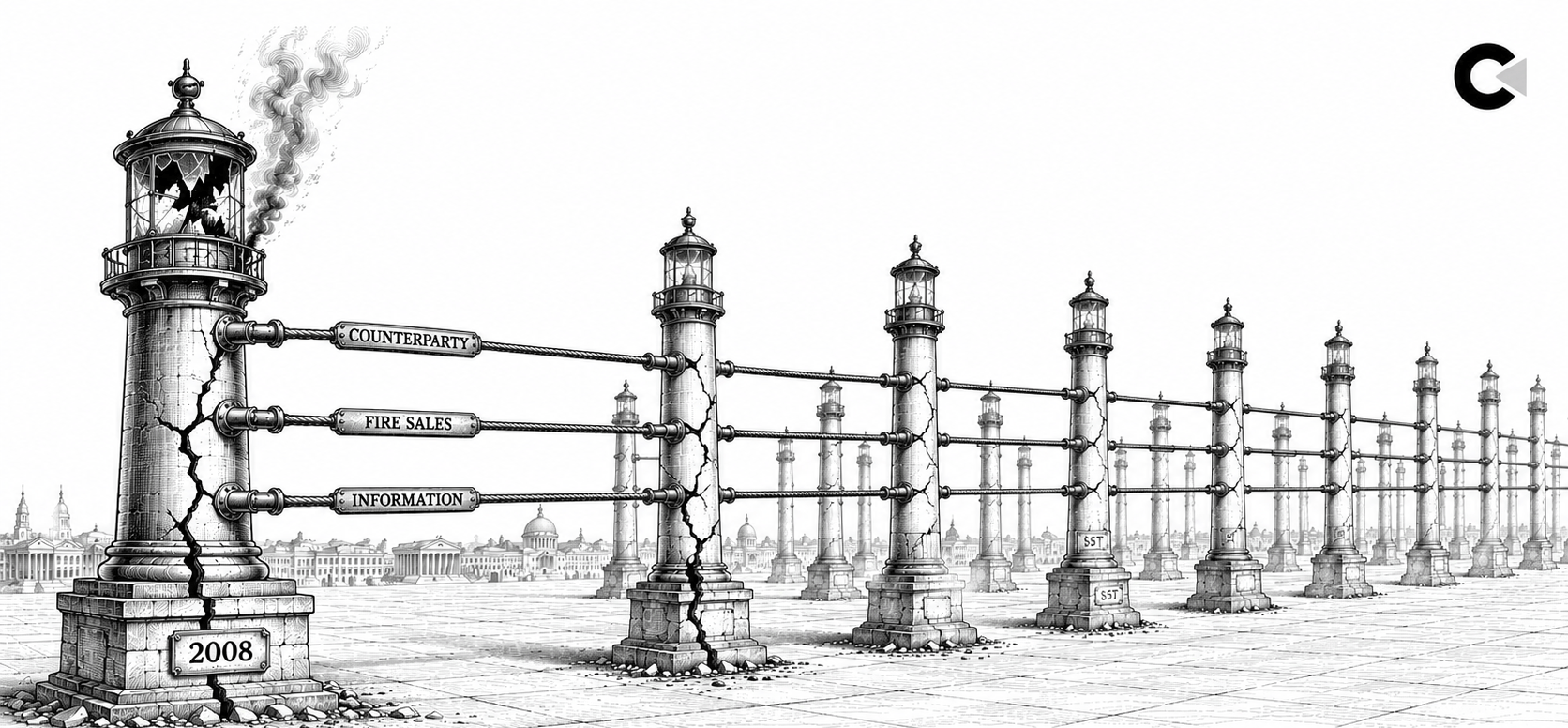
Financial contagion is not panic. It is plumbing. Three channels carry losses from one institution to the rest.
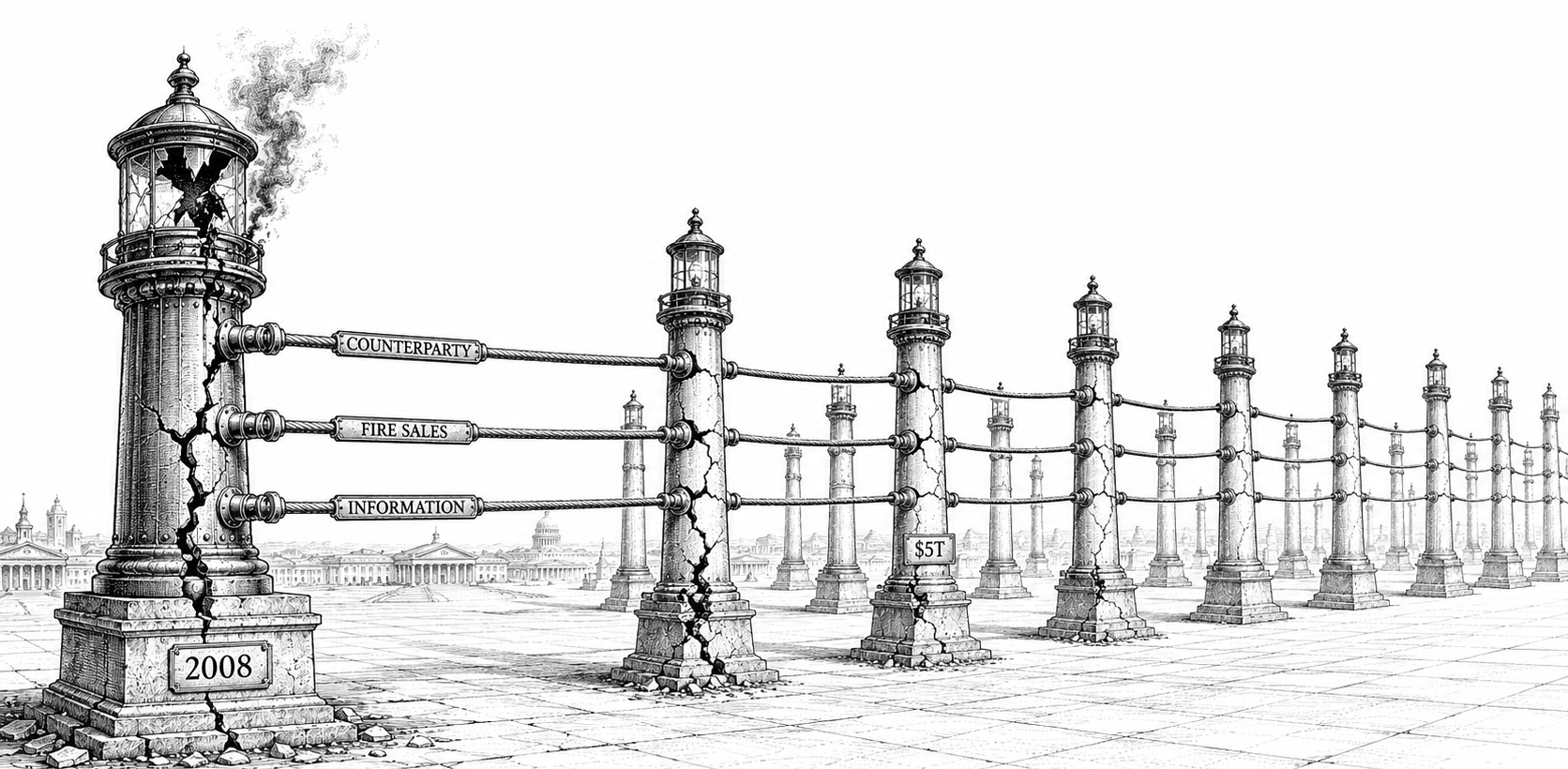
- Counterparty exposure. When firm A owes firm B, and firm A fails, firm B takes the loss instantly. Lehman held roughly $5 trillion in CDS contracts at failure.
- Fire sales of overlapping assets. A failing firm dumps positions to raise cash. Other firms holding the same assets mark down their books. Losses spread without any direct loan.
- Information shock. Even healthy firms pull back lending and hoard liquidity when one peer fails. The Rickards "ten times Lehman" framing on AI is a warning about exactly this transmission path.
The mechanism is engineering, not emotion.
▫️ THE CASE FILE
Consider September 15, 2008. Lehman Brothers filed for bankruptcy after a weekend of failed rescue talks. The firm held roughly $5 trillion in CDS contracts and was tied through repo and derivative lines to nearly every major bank.
Within seventy-two hours, the Reserve Primary Fund broke the buck on Lehman exposure. AIG required an $85 billion Federal Reserve loan to avoid collapse. By year-end 2008, the S&P had lost 38%, and nearly 500 US banks would fail by 2013.
The contagion was structural. The three channels carried it within hours.
▫️ THE PRESSURE TEST
The contagion mechanism is real. So are the risks of acting on it.
- The next failure is not always the predicted one. Most pre-2008 warnings missed Lehman specifically. The point of failure is rarely where the consensus expects.
- Defensive positioning has a cost. Gold and cash have lagged equities through long stretches. Holding too much defensive ballast costs return.
- Regulators rebuilt parts of the plumbing. Central clearinghouses and capital rules reduced some 2008 counterparty risks. Not all of them.
- Liquidity in 2026 is structurally different. Passive flows and concentrated index weights create new transmission paths.
These risks are real. But investors who study the channels rather than the headlines have positioned more calmly and resiliently when stress arrives.
▫️ AUTHOR'S LENS
I was on the floor in 1987 and watched the chain reaction happen in real time. I was in markets in 2008 when Lehman went down. Both times the headlines came after the plumbing.I do not predict the next failure. I structure my capital so it does not take me with it. That is the only thing I have found that works across cycles.Build the structure. Ignore the noise. |  |
▫️ PAST ISSUES