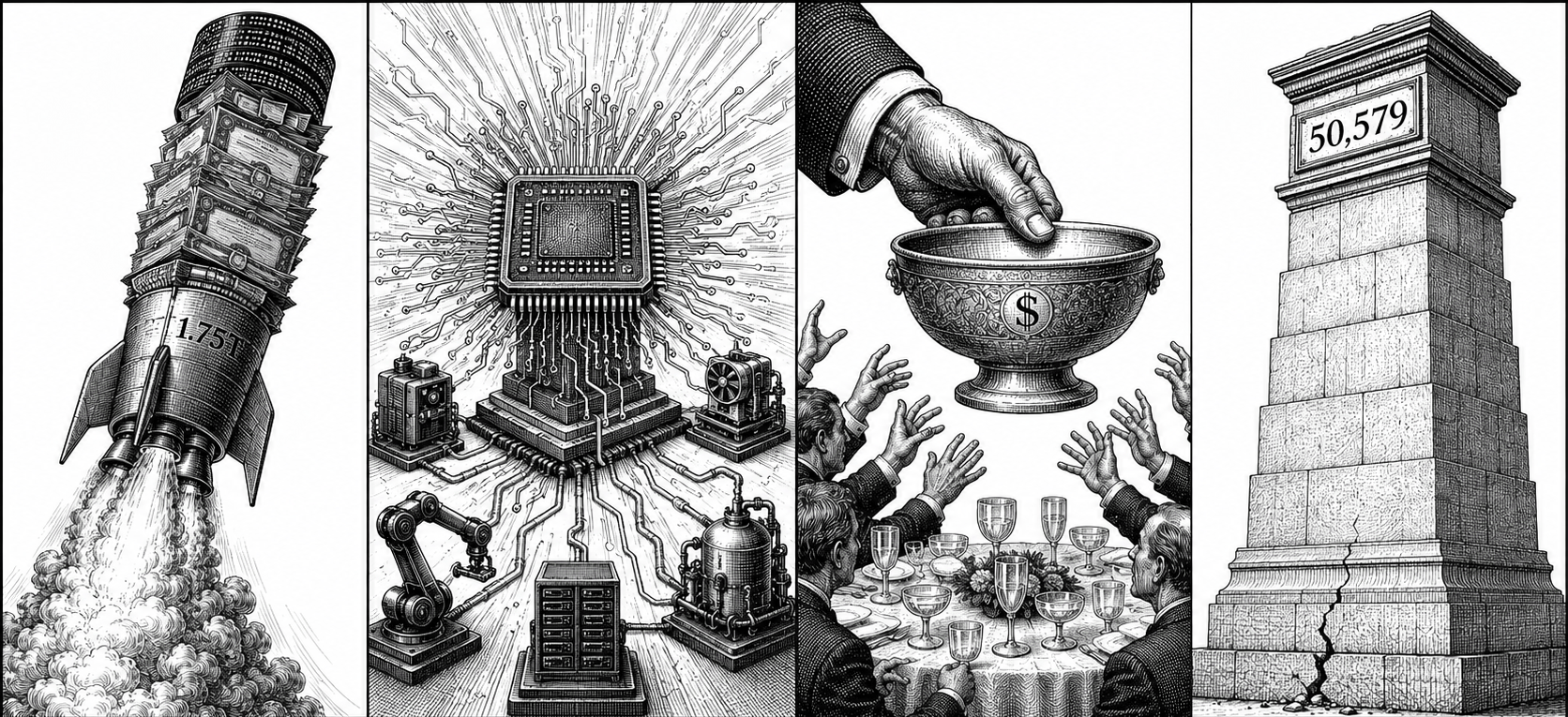
▫️ Three Men, Three Companies, One Trillion in Concentrated Market Cap
Concentration creates upside on the way in and gravity on the way out. The mechanism is structural, not psychological.
▫️ THE CORE TOPIC
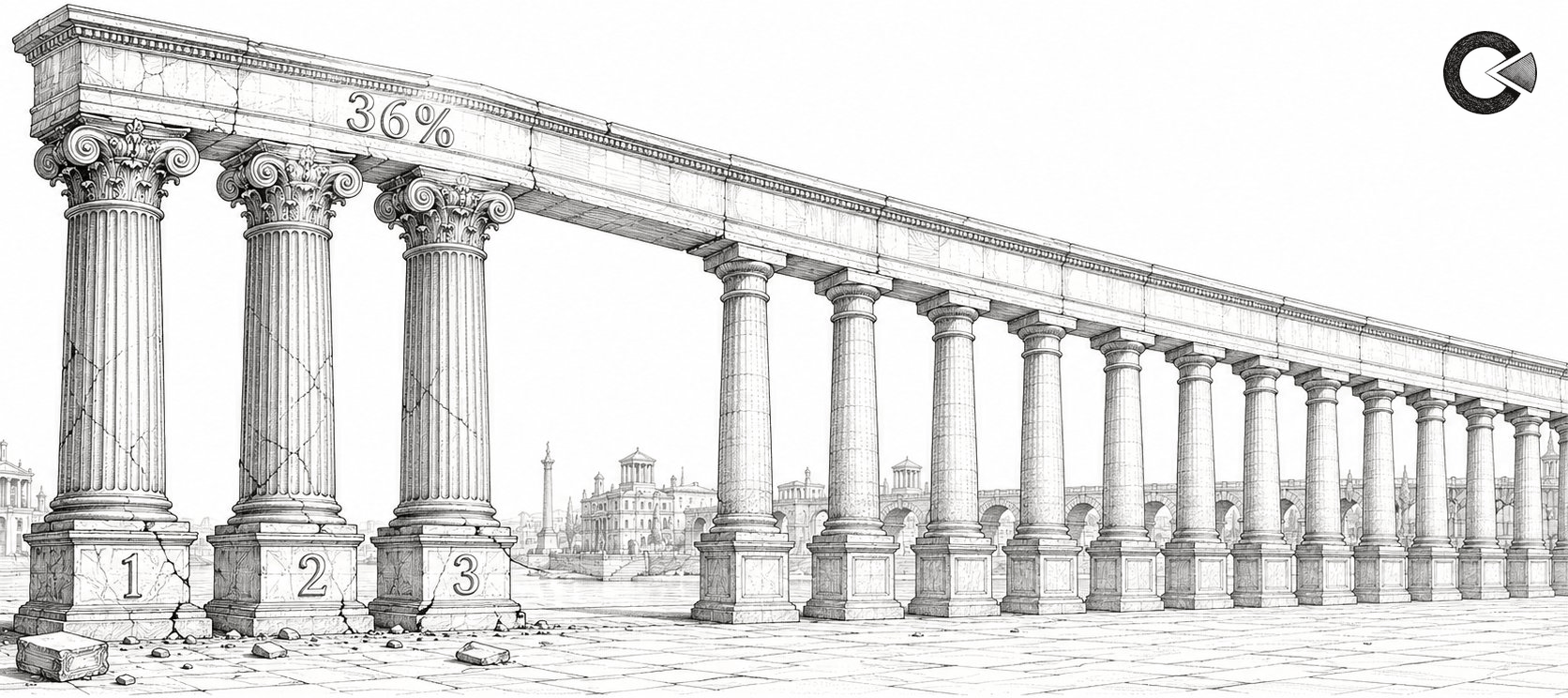
For most of market history, leadership was diffuse. The S&P 500 spread capital across hundreds of names. The top ten held maybe 20% of the index. The bedrock was broad.
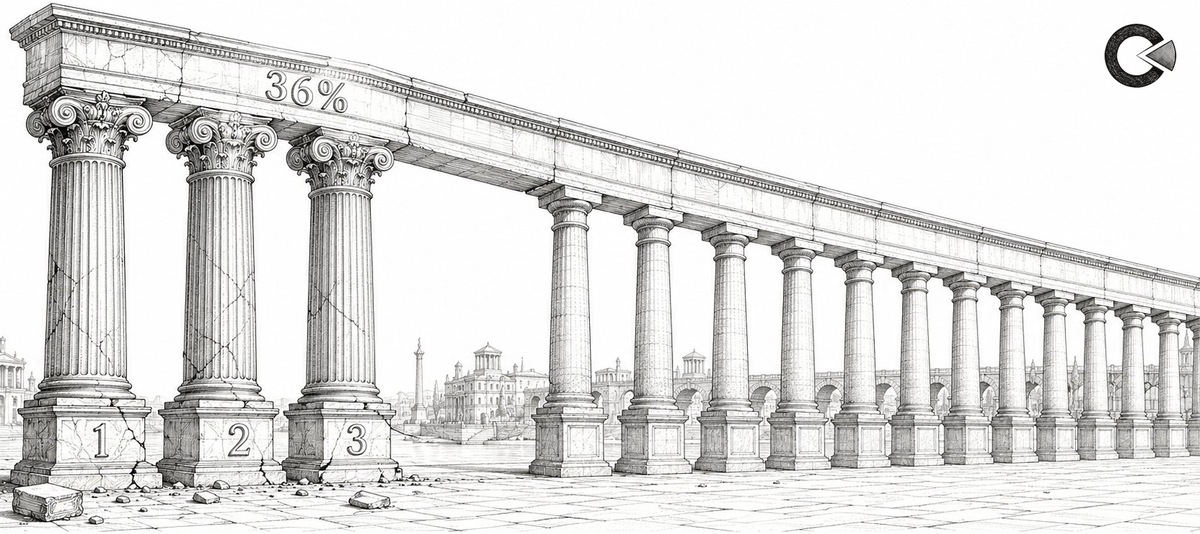
That foundation has narrowed. Top-10 stocks now sit at roughly 36% of the S&P 500 market cap, the highest level in over fifty years. The peaks of 1973 and 2000 both topped out lower. Several of those top names are founder-led or founder-shadowed, and the brightest analyst commentary now frames upcoming events like the SpaceX listing as singular wealth moments tied to one person.
The structural driver is narrative concentration. When a few names compound at double-digit rates and one founder dominates the headlines, capital follows the story. The crowd treats the founder as the moat. The math says the moat is a person.
▫️ THE MECHANISM
Concentration around a single figure does not happen by accident. Four gears drive the pattern.
- Narrative compounds faster than fundamentals. A founder with three breakthroughs in a decade gets credited for the next ten. The newsletters now sell "$3 trillion comeback" stories before the product exists.
- Index weight feeds itself. When one stock rises, index funds buy more of it. The mechanical bid stays even when the discretionary case weakens.
- Founder loyalty restricts governance. Boards defer. Risk gets concentrated where one judgment lives.
- Reputation outruns the income statement. Markets accept higher multiples on the founder's signature, not the cash flow.
Concentration is not a market-cap question alone. It is a question of where decisions live.
▫️ THE CASE FILE
Consider Apple in September 1985. The board forced Steve Jobs out after a power struggle with John Sculley. Apple shares traded near $2 split-adjusted, market cap around $1.3 billion.
For twelve years, Apple drifted. Product launches missed. Market share collapsed against Microsoft and clones. By 1997, the company was within ninety days of insolvency. The stock had lost 70% from its 1985 level while the S&P quadrupled.
Jobs returned in July 1997. The iMac launched in 1998. The iPod followed in 2001. Apple's market cap eventually crossed $3 trillion. The founder was the variable.
▫️ THE PRESSURE TEST
The founder-concentration pattern is real. The risks of acting on it are also real.
- Concentration is not destiny. GE peaked at $600 billion in 2000 under Jack Welch's shadow and collapsed under his successor. Apple recovered.
- Founder absence cuts both ways. Some companies institutionalize the founder's playbook. Others cannot.
- Timing the peak is hard. Concentration above the 1973 level lasted two more years before resolving.
- Diversified portfolios survived the lost decades. From 2000 to 2009, the S&P returned roughly zero, while bonds, gold, and international equities compounded.
These risks are real. But investors who understand that a few names carry most of the index weight can size exposure consciously and position for resilience across cycles.
▫️ AUTHOR'S LENS
I have watched three cycles where one name carried the headlines. Each time, the founder seemed to be the company. Each time, the math eventually showed otherwise.I am not betting against any of them. 36% of the S&P sits in ten names, and a share of that depends on a few people. I size to the math, not the story.Build the structure. Ignore the noise. |  |
▫️ PAST ISSUES