▫️ This Mine Was Worth Billions. It Sold for $20.5 Million.
Between a discovery and a delivered product sit permits, furnaces, and roughly a decade and a half.

▫️ THE CORE TOPIC
For a long time a mineral discovery was treated as wealth already banked. A company announced a reserve, filings carried the tonnage, and investors read the number as inventory sitting on a shelf, waiting to be sold into a hungry market.
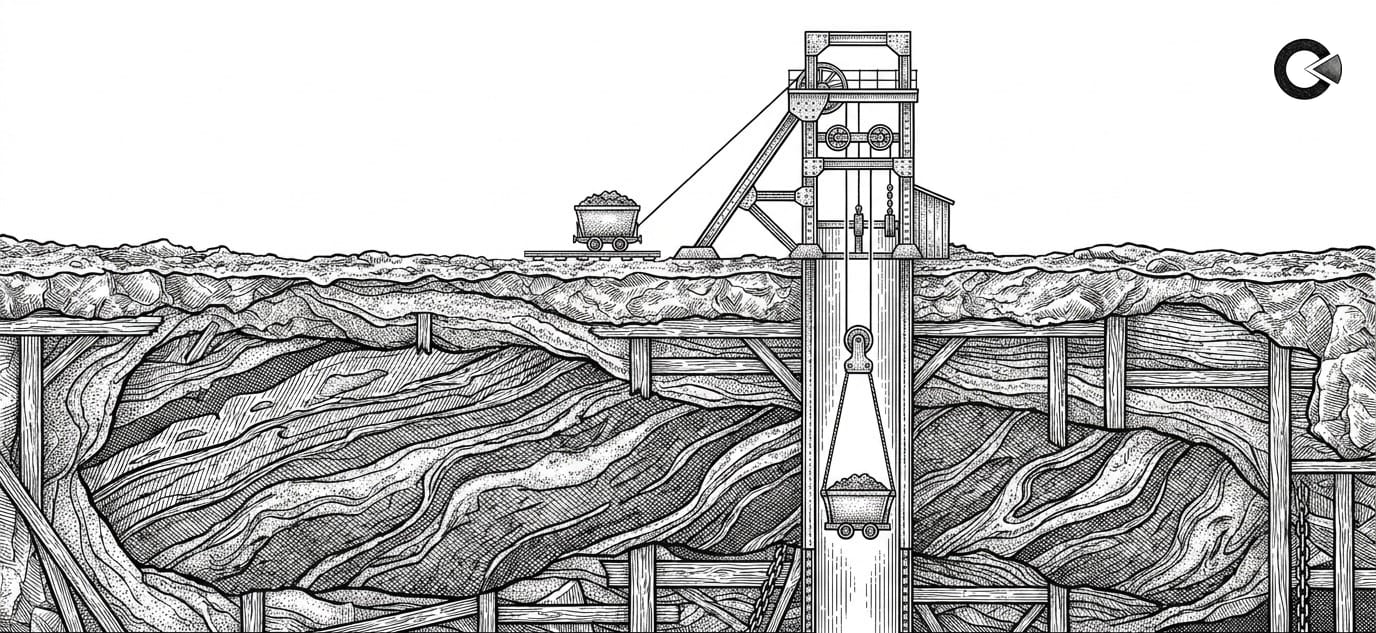
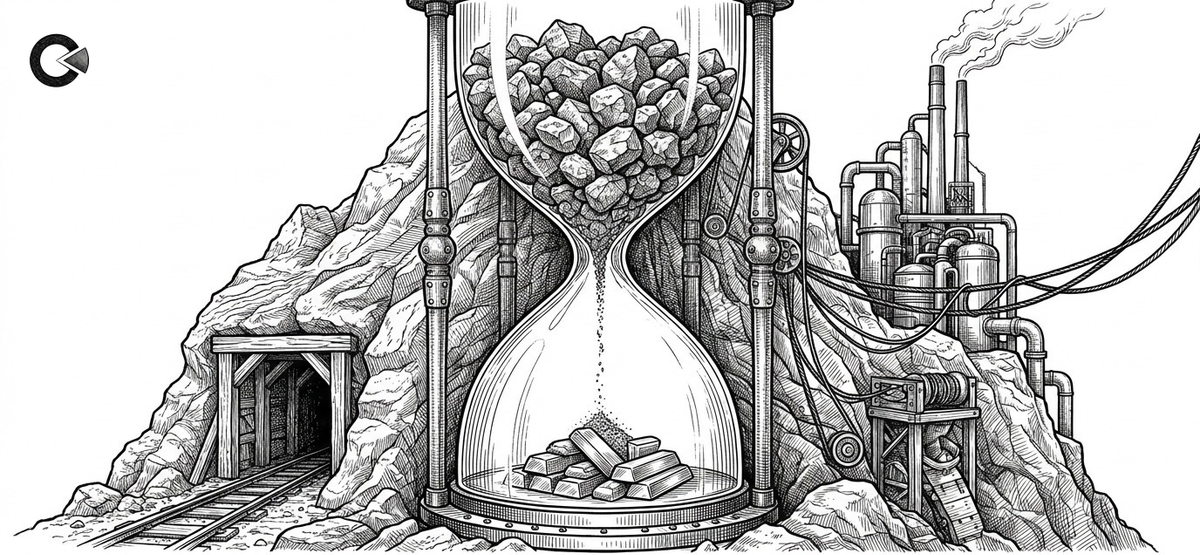
That reading skips the hard part. A reserve is a geological estimate, not a product. S&P Global tracked 127 mines and found an average of 15.7 years between discovery and first production. So when a single site is described as holding one of the largest mineral reserves in the country, the rock is real and the timeline is long.
The driver is that mining and processing are two separate industries. Pulling ore out is the straightforward part. Separating it into usable metal takes refineries, chemistry, and permits, and that capacity is built over decades, often somewhere else entirely.
For your capital, this splits a headline in half. Owning the rock and owning the output are different businesses with different risks, and the market often prices them as one.
▫️ THE MECHANISM
The gap between a reserve and a delivered product runs through a few gears.
- Permitting comes first. Exploration and feasibility work consumes more than a decade on average before construction starts, and construction itself takes another four to five years.
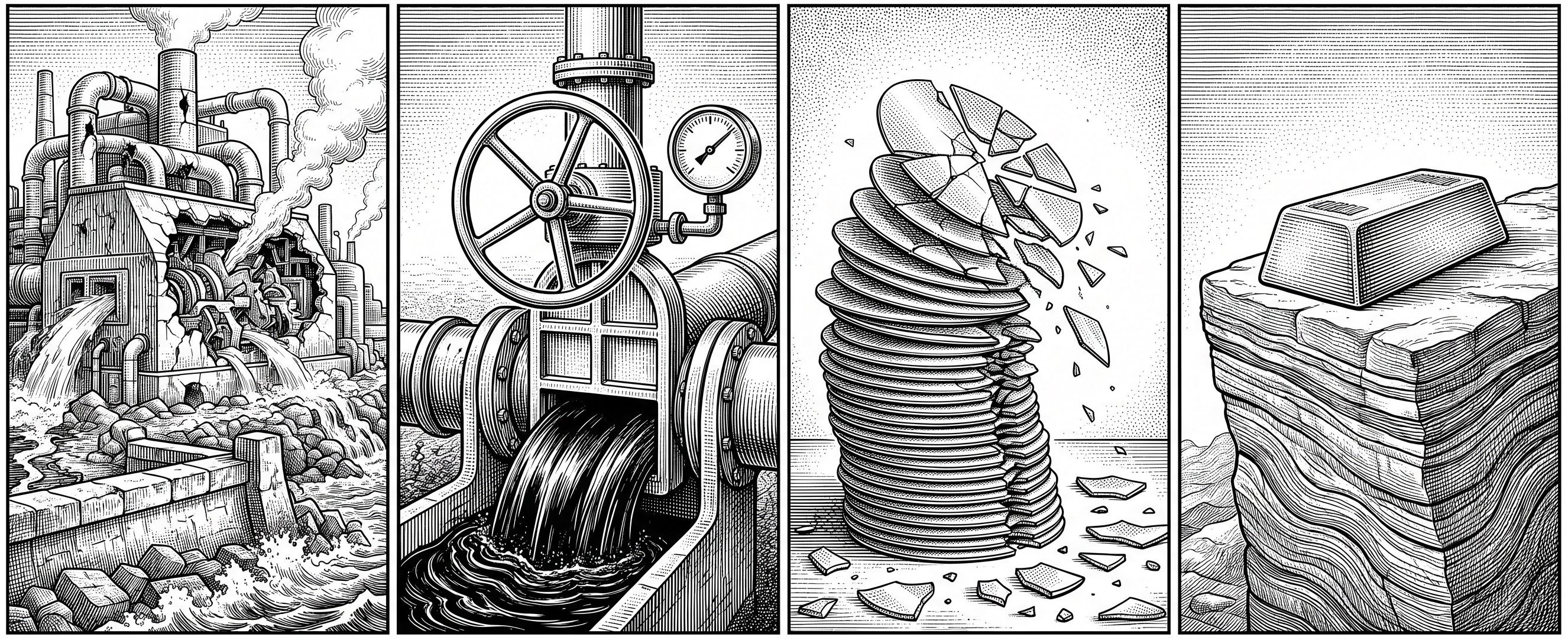
- Refining is a different business. Ore leaves a mine as concentrate. Turning it into metal a factory can use requires separation plants that few countries have built.
- The marginal producer sets the price. An established low-cost supplier can raise output and push prices below a new entrant's costs, long before that entrant finishes building.
- Demand can arrive early. Even those bracing for a sharp repricing of today's leading AI names expect the physical buildout to keep consuming refined metal, and consumption does not wait for a mine to be ready.
A reserve tells you what exists. It does not tell you what arrives, or when.
▫️ THE CASE FILE
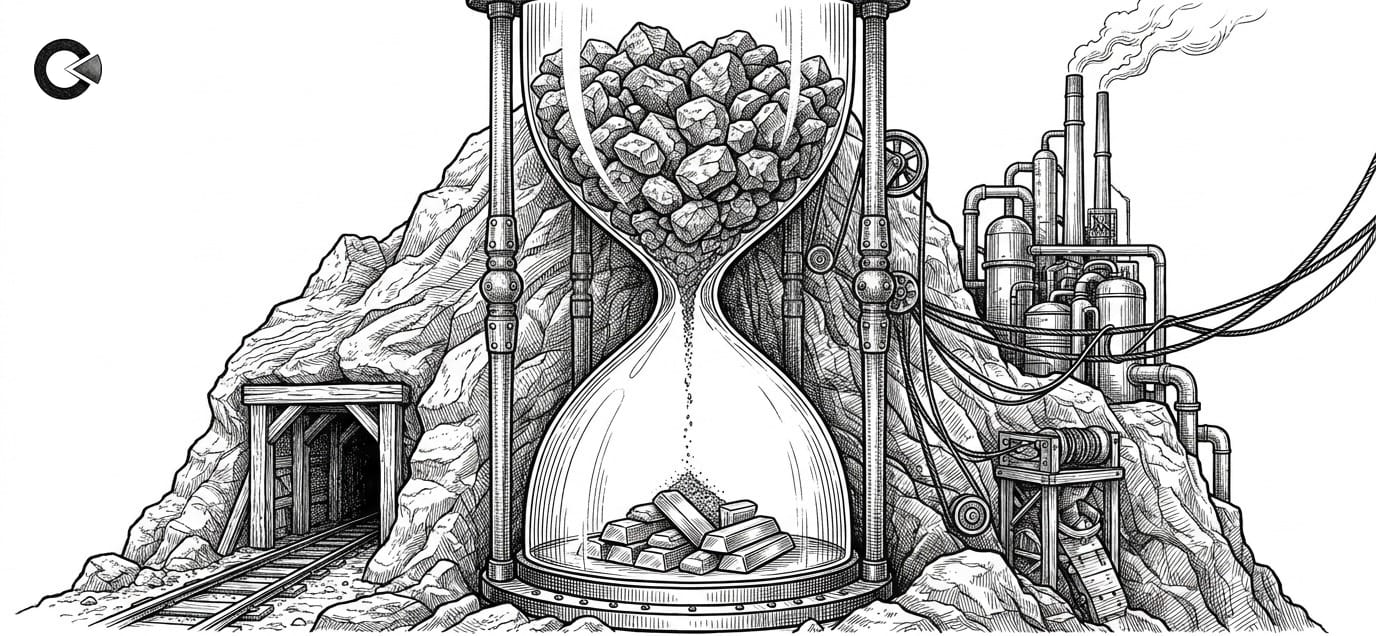
Molycorp owned Mountain Pass in California, the only working rare-earth mine in the United States. It looked like the answer to a strategic problem.
The company listed in August 2010 at $14.00 a share. Rare-earth prices spiked, and by 3 May 2011 the stock reached $79.16. The ore body had not changed. The price of what came out of it had.
Then prices reversed as supply returned. Molycorp filed for bankruptcy in June 2015 carrying $1.7 billion of debt. The mine itself was later sold at auction for $20.5 million to an American-led consortium. The rock was always there. The business built on it was not.
▫️ THE PRESSURE TEST
- A great deposit can still lose money. Grade and tonnage do not decide profit. Costs, prices, and financing do, and they move independently of geology.
- Support does not compress time. Backing can fund a project and shorten permitting, but it cannot make chemistry, construction, or trained operators arrive faster.
- Prices can reverse mid-build. A shortage that justified the investment may be gone by the time the plant opens, as Mountain Pass showed.
- Reserve figures are estimates. They rest on assumptions about price and recovery rates, and they get revised in both directions.
None of this argues against owning real things. It argues for owning the ones that need no permit, no furnace, and no decade of construction. Gold is already finished when you hold it.
▫️ AUTHOR'S LENS
I have watched a lot of men fall in love with a map. The drill results come back strong, the tonnage is enormous, and everyone starts multiplying ounces by today's price. What almost nobody prices is the fifteen years and the plant that has to exist first.I want production, not potential. The metal in my hands went through all of that already, and nothing between me and its value still needs to be built.Build the structure. Ignore the noise. |  |
▫️ PAST ISSUES