▫️ The Senate Called Its Final Report "Crisis Averted." Others Called It Waste.
Most documented domestic incidents turned out to be minor, localised and over within hours.
▫️ THE CORE TOPIC
Plain white containers have been appearing beside substations and on the edges of towns across America. Most people drive past without registering them.
They are batteries, and there are a great many now. American utility-scale storage stood at 43.6 gigawatts at the end of 2025, and operators added another 8.3 GW of battery storage in the first six months of 2026, taking the total to nearly 52 gigawatts. On an ordinary day most of that sits still.
That is the shape of all protection, and it is the least examined item in a portfolio. You buy capacity you hope never to call on. The return does not show up as income, because the return is an event that fails to happen, and an event that fails to happen produces no paperwork, no headline and no line in an account.
So the owner is left with a cost he can measure precisely and a benefit he can never measure at all. That asymmetry, not the price, is what makes protection hard to hold on to.
▫️ THE MECHANISM
Protection behaves unlike anything else you own, in four ways.
- You pay in the calm and collect in the storm. Every premium, every idle megawatt and every unused reserve is bought during the good period, which is exactly when the case for it sounds weakest.
- The payoff is a non-event. Nothing arrives in the post. The fire does not start, the grid does not fail, the position is not forced out at the bottom.
- Success and waste look identical afterwards. Two households pay the same premium for thirty years. One claims, one does not. Only in hindsight does anyone call the second one foolish.
- The cost is precise, the benefit is a guess. One side of the ledger is invoiced monthly. The other has to be estimated, and estimates lose arguments against invoices.
Warnings are being issued from every direction just now. The question worth asking is not whether a forecast is right, but what the protection costs to carry while you wait to find out.
▫️ THE CASE FILE
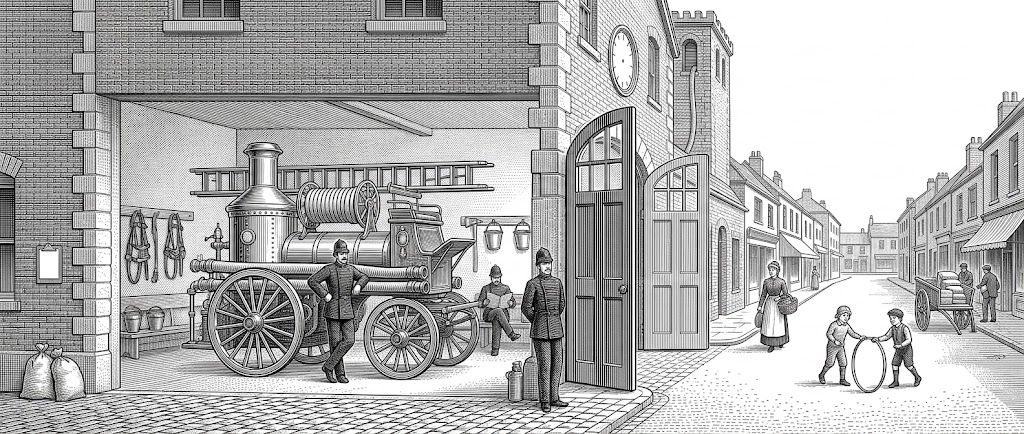
The largest bill ever paid for something that then did not happen came due at the end of 1999. American businesses and government spent more than $100 billion preparing for the date change, according to the Commerce Department, which worked out to about $365 for every citizen and covered repairs from 1995 through 2001.
Then the clocks rolled over and very little went wrong. The Senate committee set up to study the problem gave its closing document the title Y2K Aftermath: Crisis Averted.
The argument has never been settled since. One camp says the money bought the quiet night. The other says the threat was overstated and the quiet night proves it. Nobody can run 1999 again without the spending, which is the whole difficulty.
▫️ THE PRESSURE TEST
- Plenty of protection is sold badly. Fear is the easiest thing in finance to charge for, and the buyer of an overpriced hedge has simply funded somebody else's marketing.
- A quiet decade proves nothing either way. The absence of a disaster is not evidence that the disaster was impossible, and it is not evidence that it was ever coming.
- Cover decays. Policies lapse, hedges expire, batteries lose capacity and standby equipment stops working without announcing it. Protection bought once is not protection held.
- Too much of it is its own loss. Capital parked against every conceivable event earns nothing across the decades when nothing happens, and those are most of them.
The discipline is to price the carry openly. Decide what you are willing to spend each year on the thing that may never arrive, write the number down, and stop relitigating it every quarter the sun shines.
▫️ AUTHOR'S LENS
I have never once been thanked for a hedge that worked. Nobody congratulates you for the loss you did not take, because there is nothing to point at. The praise goes to whoever was fully committed during the good years, right up until it stops.So I gave up expecting the ledger to show it. A portion of what I hold, gold included, is there to earn nothing for long stretches. That is the job. If it ever looks obviously worth it, I will already have needed it.Build the structure. Ignore the noise. |  |
▫️ PAST ISSUES