▪️ The Fed Held Rates, but the Pressure Kept Rising
This week was about one thing: the system is getting more expensive to run.

CAPITAL BACKBONE
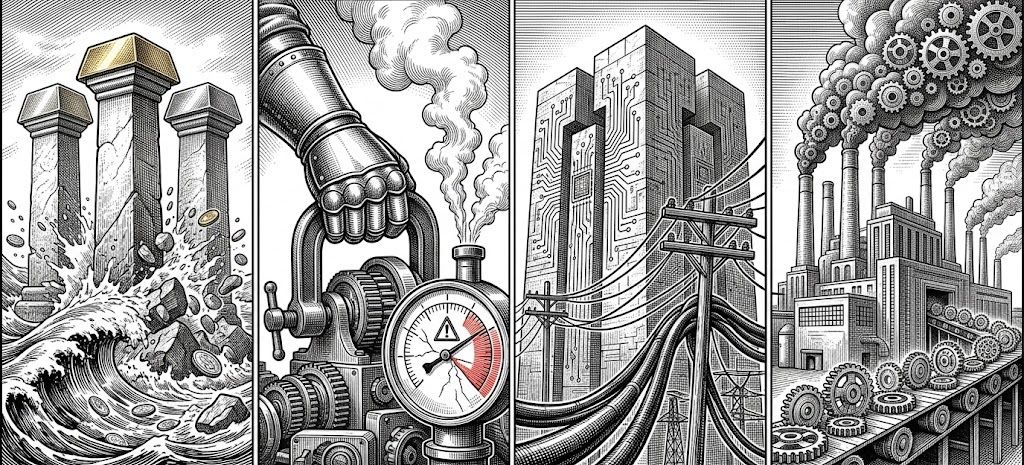
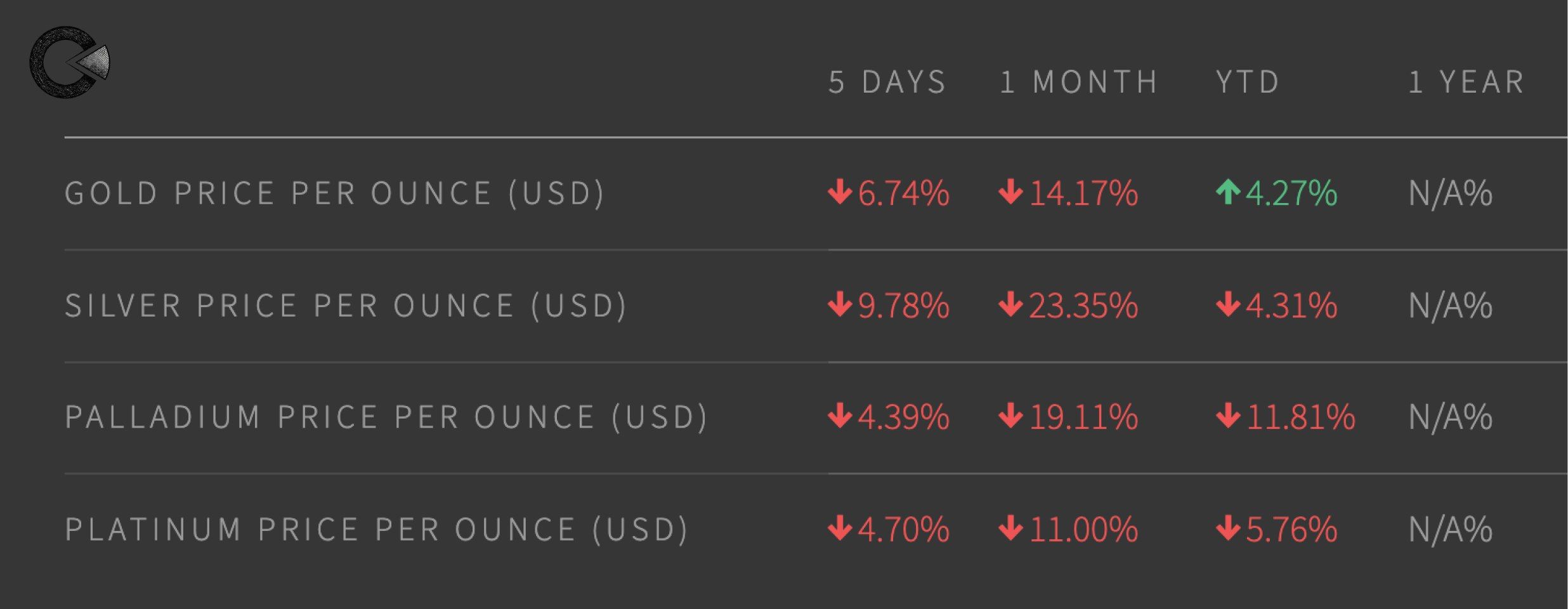
Gold absorbed a third straight weekly correction as the dollar firmed, yields stayed high, and rate-cut hopes kept thinning. By Friday, spot bullion was near $4,563 after trading around $4,612 a day earlier. Physical trade adjusted, not vanished. India’s discount narrowed to $75 an ounce from $83, and Chinese premiums stayed positive at $10 to $22. That looks like leverage washing out, not the metal losing its job.
Silver corrected too, ending Friday near $69.39 after trading near $71.39 on Thursday. Pressure came from the same place - stronger dollar, higher yields, and tighter policy fears. But silver still stands on two legs: money and industry. When paper markets start pricing harder conditions, hard assets do not lose relevance. They get tested, repriced, and kept in reserve.
THE ENTRY POINT
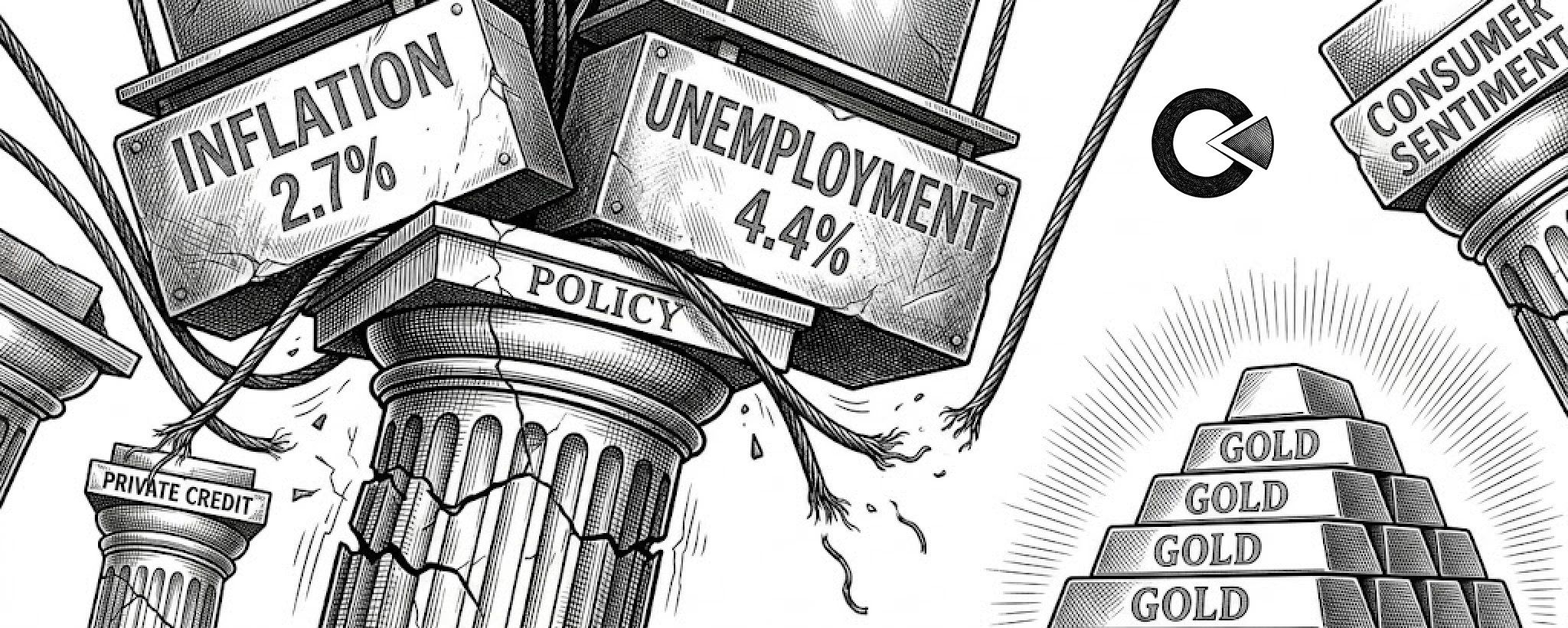
The week turned on the Federal Reserve. It held rates at 3.50% - 3.75%, kept only one cut in its median 2026 path, and lifted its inflation forecast to 2.7% from 2.4%. Growth stayed at 2.4%. Unemployment stayed at 4.4%. That is the real message. Policy is no longer leaning toward rescue. It is bracing for oil, tariffs, and sticky price pressure.
When the central bank sees higher inflation and no clean labor relief, leverage loses oxygen. Duration loses protection. Every oil headline matters more. Every freight shock hits harder. Gold gains weight in that frame because it does not need a policy pivot, a clean CPI glide path, or a central banker’s promise to hold structure.
STRUCTURAL ANALYSIS
Complex: North American corporate power-purchase agreements are repricing under hyperscaler load growth, tax-credit attrition, and interconnection urgency. Q4 solar PPA prices rose 9% year over year to $61.7/MWh, wind rose 9% to $73.7/MWh, and in ERCOT fair values climbed 16% for wind and 8% for solar. Data-center demand is forcing larger contracts, faster execution, and more complex offtake structures across the grid.
Simple: AI needs huge amounts of electricity, and it needs it fast. Data centers are paying up because waiting is now more expensive than overbuilding. That means more steel, more transformers, more turbines, more debt, and more pressure on every real-world bottleneck. Data centers could reach 9% of U.S. electricity demand by 2030, up from 4% in 2025. For gold, the lesson is plain - digital growth still rests on scarce physical inputs and expensive capital.
INDEX BEARINGS

S&P 500 | NASDAQ | Dow Jones | Russell 2000 | XAU |
|---|---|---|---|---|
6,506.48 | 23,898.15 | 45,577.47 | 2,438.45 | 328.28 |
-1.9% | -2.0% | -2.1% | -1.7% | -14.1% |
Numbers show Friday market close. Weekly percentages show week-over-week change.
WHAT MATTERS / WHAT DOESN'T
What matters: producer prices. February PPI rose 0.7% on the month and 3.4% year over year. That was the strongest monthly gain in seven months.
Why it matters: upstream inflation is already moving through services, trucking, food, and lodging. That is before the full oil shock finishes working through the pipe. This is how sticky inflation comes back through the side door.
What doesn’t: the calmer tone in crash hedging. TailDex and the Cboe Skew Index moved back near pre-strike levels as traders paid less for disaster protection.
Why it doesn’t matter much: cheaper tail hedges do not reopen shipping lanes, lower diesel, or cut borrowing costs. Positioning can relax faster than the real economy can heal. The options market can blink. Gravity does not.
MARKET BEARINGS
NVIDIA Corporation $NVDA ( ▼ 3.33% ) Nvidia said its AI-chip revenue opportunity could reach at least $1 trillion through 2027 and used GTC to push harder into inference, not just training. This matters because the AI build is broadening from model creation to live deployment, which expands the need for chips, systems, networking, and power.
Accenture plc $ACN ( ▲ 0.97% ) Accenture beat on revenue at $18.04 billion, posted $22.1 billion in bookings, and plans about $5 billion of AI-focused acquisitions this year. This matters because enterprise AI demand is real, but the path is not frictionless. Strong bookings can coexist with budget pressure and slower federal spending.
FedEx Corporation $FDX ( ▼ 0.68% ) FedEx raised its full-year profit outlook to $19.30 - $20.10 a share after record holiday profit and steady demand, even as fuel costs and route disruption stayed elevated. This matters because transport remains a live test of the real economy. Demand is bending, but not yet breaking.
Sector | Symbol |
|---|---|
Financials | |
Technology | |
Materials | |
Real Estate | |
Communication Services | |
Consumer Discretionary | |
Energy | |
Industrials | |
Utilities | |
Healthcare | |
Consumer Staples |
AUTHOR'S LENS
 | Susan Price: The cleaner signal came from the plumbing. Producer prices ran hot. Power contracts repriced. FedEx showed that fuel pressure has not killed demand, only made execution harder. That is the kind of market I trust - one that reveals strain through cost, logistics, and infrastructure. Capital is getting more selective, and the weak structures already know it. |
Marcus Grant: The Fed did not blink. That mattered more than the hold itself. Once inflation forecasts rise and cuts lose certainty, markets stop trading hope and start trading load-bearing reality. Gold did not need a clean week to prove its role. It only needed another reminder that policy can hesitate while pressure keeps building. |  |
QUOTE OF THE DAY
“Don’t be afraid to see what you see.”
- Ronald Reagan.