▫️ One Strait Moves a Fifth of the World's Oil. Here's Why.
From Hormuz to rare-earth plants, a handful of passages now sit between what the world makes and what you pay.
▫️ THE CORE TOPIC
For decades, markets treated supply as a given. Oil flowed, ships sailed, materials arrived. Distance was a cost, not a risk.
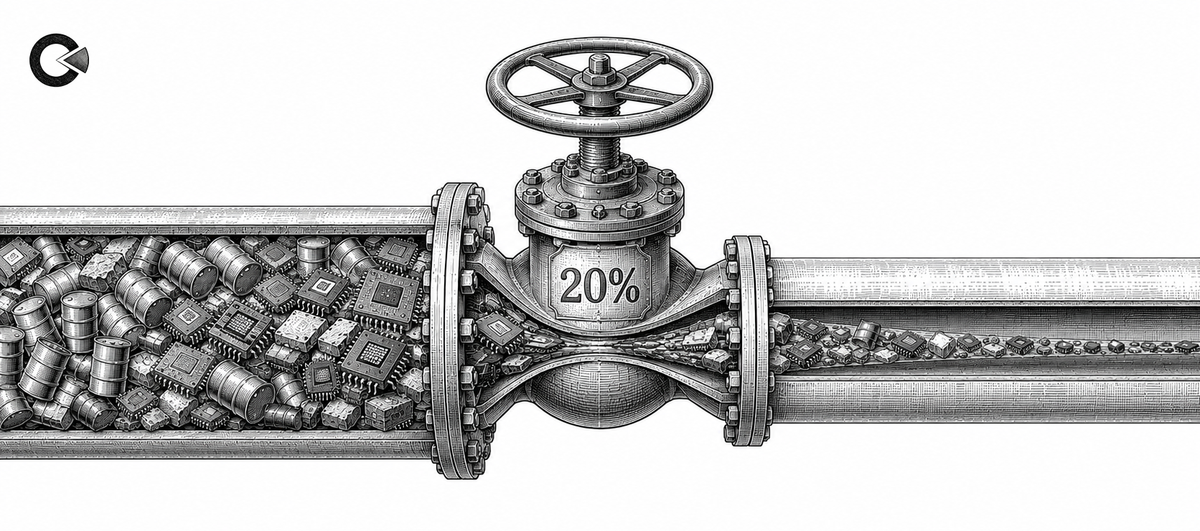
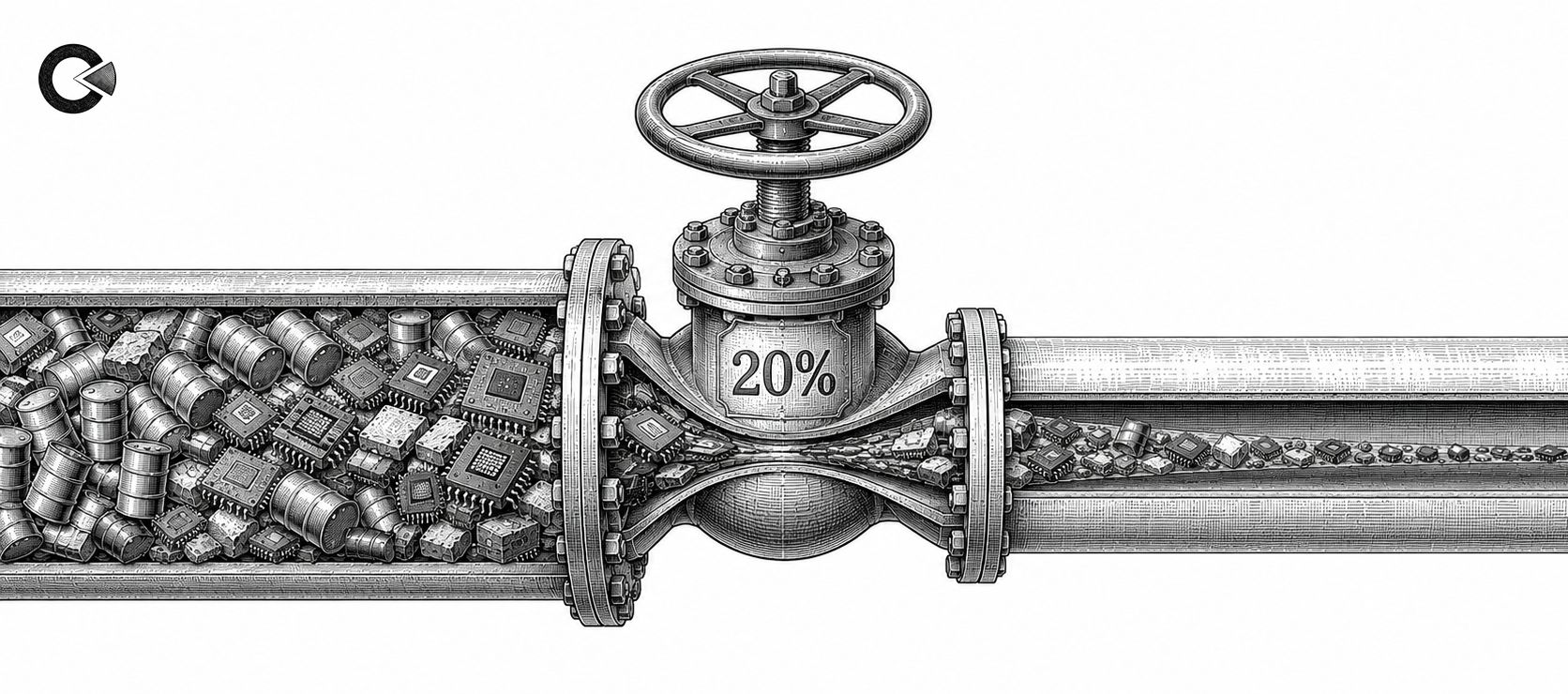
That assumption is gone. The Strait of Hormuz carries roughly 20 million barrels of oil a day, near a fifth of global supply. In June, one de-escalation there moved oil 14 percent in five sessions. One passage, one week.
The driver is concentration. A handful of straits, pipelines, and processing plants now sit between production and price. When one tightens, the whole chain reprices at once.
The recent fear of a wider war with Iran was, at its core, a fear about that one waterway. The map of risk has narrowed to a few points on it.
▫️ THE MECHANISM
Chokepoints move markets through a few simple gears.
- Volume concentration. Near 20 million barrels a day pass through Hormuz, with no fast way to reroute them.
- Time to substitute. New mines, ports, and processing plants take years to build, not weeks.
- Price discovery. Traders price the worst case first and ask questions later.
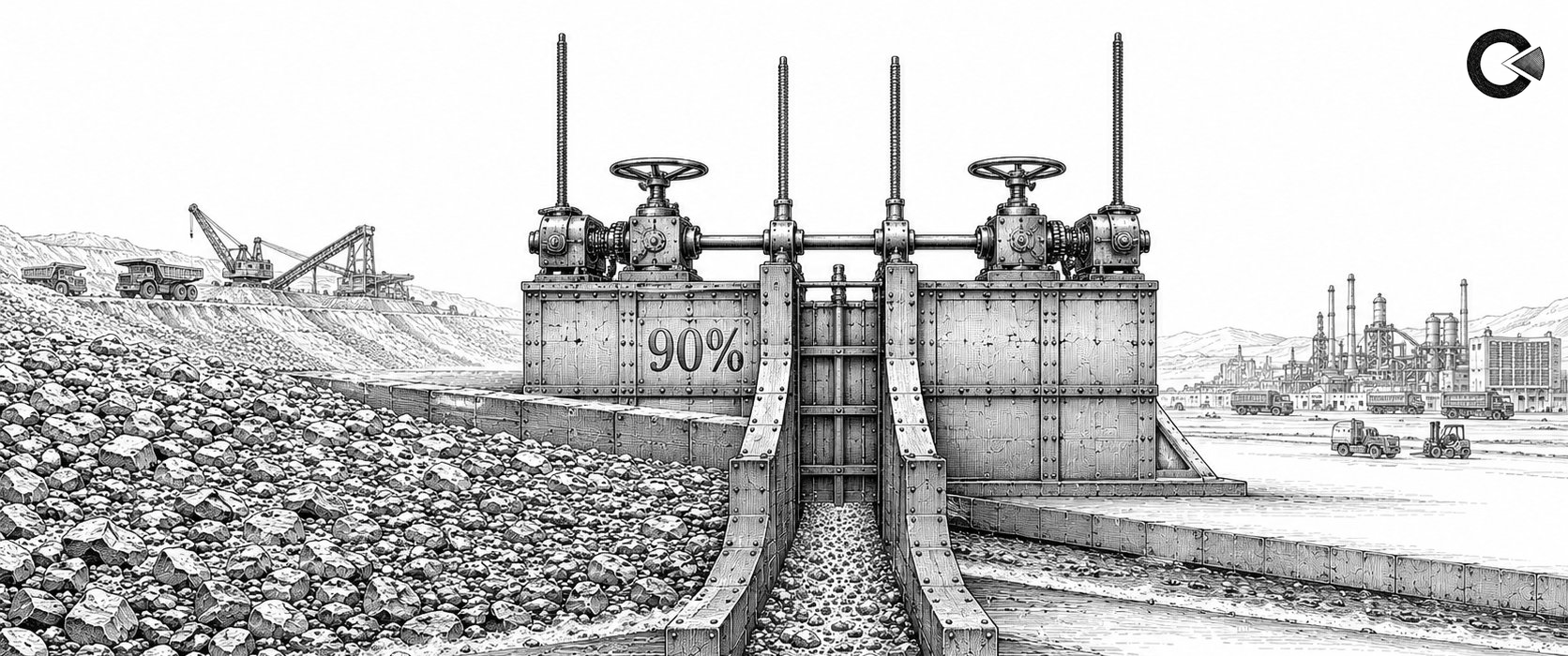
- Strategic materials. China refines an estimated 85 to 90 percent of the rare earths used in magnets, electric motors, defense systems, and the satellites behind the new space economy. The companies promising a frontier beyond SpaceX run on these same materials.
Control the gate and you set the price.
▫️ THE CASE FILE
October 1973. The Arab members of OPEC cut exports in response to the Yom Kippur War. Oil moved from about $3 a barrel to roughly $12 within months, a fourfold rise.
The shock spread fast. The Dow lost close to 45 percent from its 1973 peak into late 1974. Gold, freshly unpegged from the dollar, climbed through the decade and became the decade's anchor.
One political decision at one chokepoint reset every market on the board.
▫️ THE PRESSURE TEST
- Overreaction risk. Chokepoint scares often fade fast. The premium can drain as quickly as it spikes.
- Headline whiplash. Daily war talk moves prices for a day, not the underlying structure of supply.
- Crowded hedges. When everyone hedges the same strait at once, the protection gets expensive and thin.
- False alarms. Not every threat actually closes a passage. Most are settled offstage before they ever reach the tape.
The lesson still holds. Portfolios built on real assets and secure supply absorb these shocks far better than those built on a single hope or a single headline.
▫️ AUTHOR'S LENS
I have traded through enough scares to know the pattern. The map looks terrifying for a week. The flow almost always finds a way through.But the structure underneath is real. A world that runs through a few narrow gates rewards the people who own what cannot be blocked. I keep my foundation in things that still hold when the passage closes.Build the structure. Ignore the noise. |  |
▫️ PAST ISSUES