▫️ One Rocket Booster Has Flown Thirty-Five Times. Nobody Priced That In.
Divide the same hardware cost across thirty-five flights and every number downstream of it reprices.

▫️ THE CORE TOPIC
For most of industrial history the vehicle was part of the cargo's cost. A rocket flew once and fell into the sea. Crates were broken open and burned. The hardware was consumed along with the work it did.
That assumption is being taken apart in public. In June a Falcon 9 first stage flew and landed for the 35th time in one booster's life, and the same operator had already reached its 66th flight of the year by that date.
The arithmetic underneath is plain. Throw a vehicle away and its whole cost lands on a single job. Fly it thirty-five times and that cost is divided thirty-five ways, at which point everything downstream reprices: insurance, scheduling, and the willingness to carry payloads that could never previously justify a seat.
It also changes what the ground around the operation is worth. A launch site used a few times a decade is a curiosity. One used weekly is infrastructure, and everything within a mile of it inherits that cadence.
▫️ THE MECHANISM
Reuse rewires an operation in four places.
- Cost per use replaces cost. The number that matters stops being the price of the hardware and becomes that price divided by the number of jobs it survives.
- Refurbishment becomes the real business. Between uses somebody has to inspect, repair and certify. That work is where the saving is either won or given back.
- Cadence shrinks the fixed costs. A pad, a crew and a control room cost roughly the same whether they are used twice a year or twice a week, so frequency does the work.
- Residual value appears. A consumable has none by definition. An asset that survives the job holds worth afterwards, and that changes how the whole thing can be financed.
It also explains why attention keeps drifting back toward land, power and water. None of the three is consumed by the work. They are occupied, released, and occupied again.
▫️ THE CASE FILE
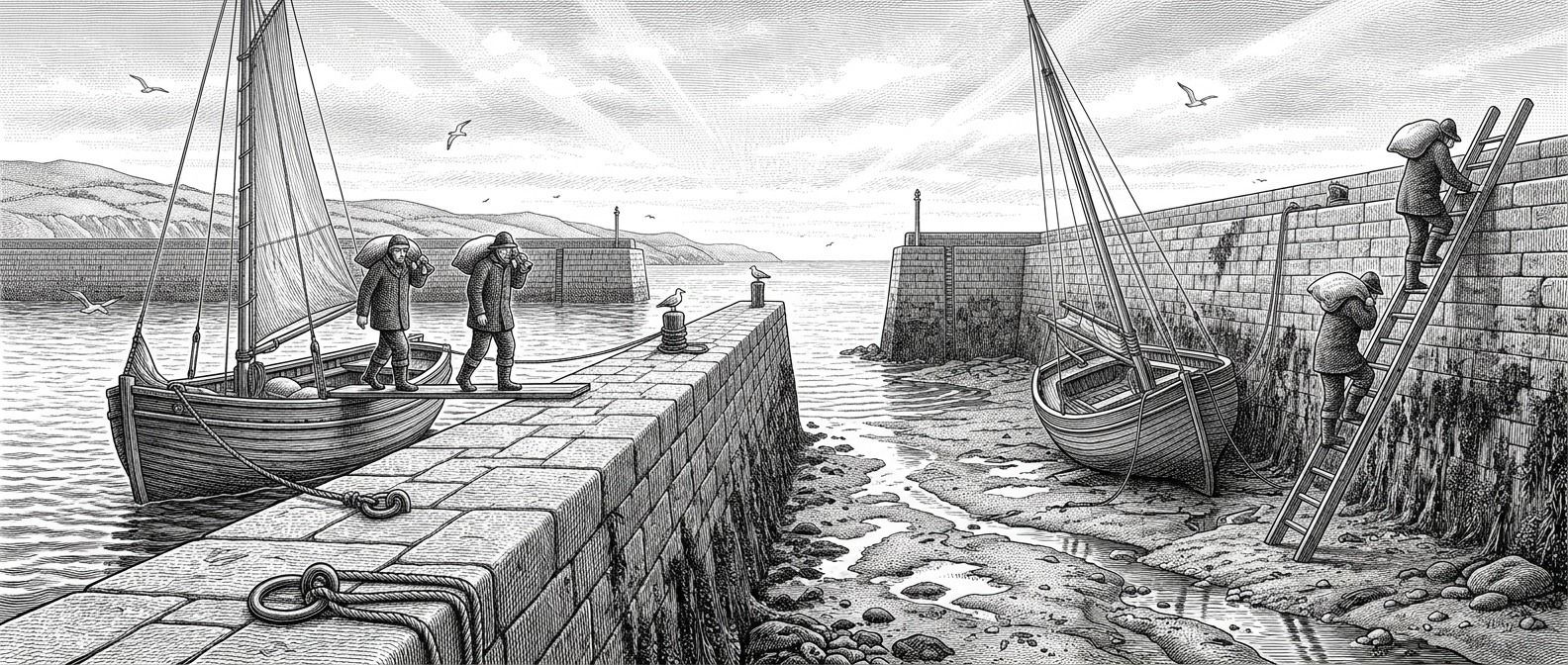
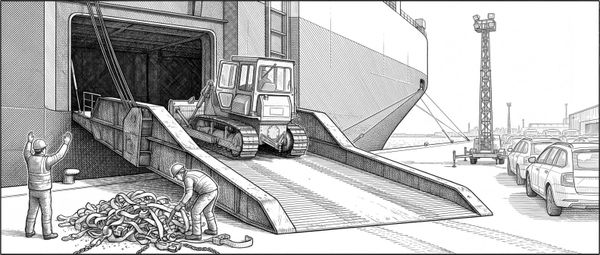
The precedent is a steel box, and it is only seventy years old. On 26 April 1956 a converted tanker left Port Newark carrying 58 metal containers. Until then cargo moved as loose crates, sacks and barrels, loaded piece by piece by gangs of men.
The number that decided everything was not the ship. Loading loose cargo cost $5.83 per tonne in 1956, and the same people put the cost of loading that tanker at 15.7 cents a tonne.
The box itself was unremarkable, a welded steel rectangle. What made it work was that it came back, went round again, and fitted a lorry, a railcar and a crane without ever being unpacked. World trade then reorganised itself around a container nobody threw away.
▫️ THE PRESSURE TEST
- Reuse carries its own bill. Hardware built to survive repeated work costs more to make and carries weight that could have been payload.
- The saving needs volume. Dividing a fixed cost across many uses only helps if the uses actually arrive. A reusable asset standing idle is simply an expensive one.
- Fatigue is real. Every cycle spends part of the life, and inspection regimes exist because the failure that matters accumulates out of sight.
- The edge gets competed away. Once a cost falls by a factor of thirty, most of the saving passes to customers rather than to whoever engineered it.
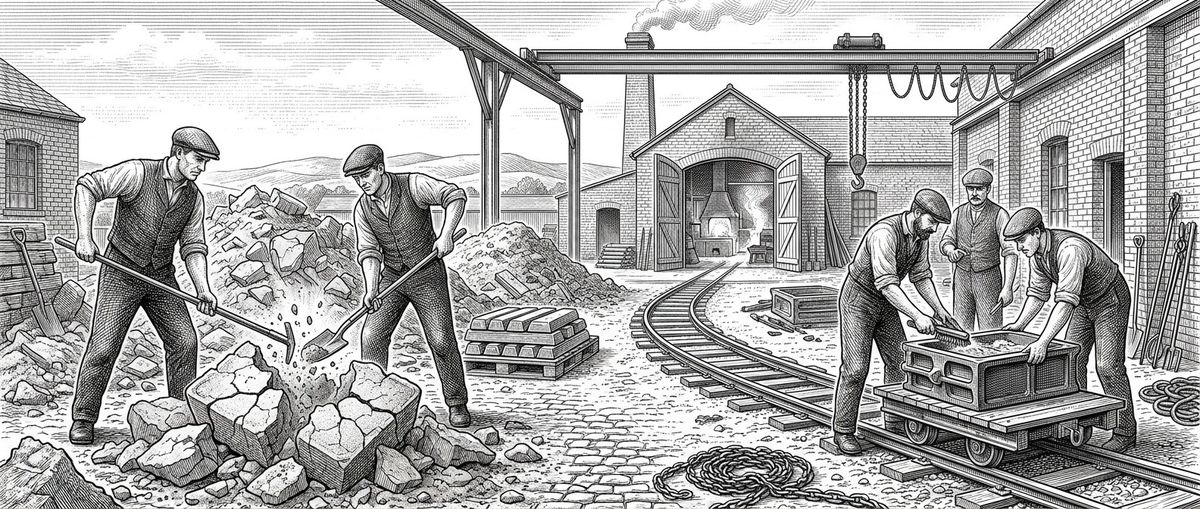
The asset that needs none of this machinery is the one that was never consumed to begin with. Metal does not wear out in use, needs no certifying between owners, and carries its whole worth into the next pair of hands.
▫️ AUTHOR'S LENS
In the pits everything I traded was a promise with an expiry on it. The contract ran out, the position closed, the paper was gone. It took me years to notice how much of investing is buying things that get used up while being useful.Now I ask one question of anything I own. What is left when the job is finished. A vehicle that comes back is worth more than one that does not, and a thing that was never consumed at all is a different category again.Build the structure. Ignore the noise. |  |
▫️ PAST ISSUES