▪️ Lockheed's Order Book Hit $230 Billion. That Says More Than Any Forecast.
Traffic through the strait has collapsed to a fraction of pre-war levels, and every cargo still has to move somehow.

▪️ THE ENTRY POINT
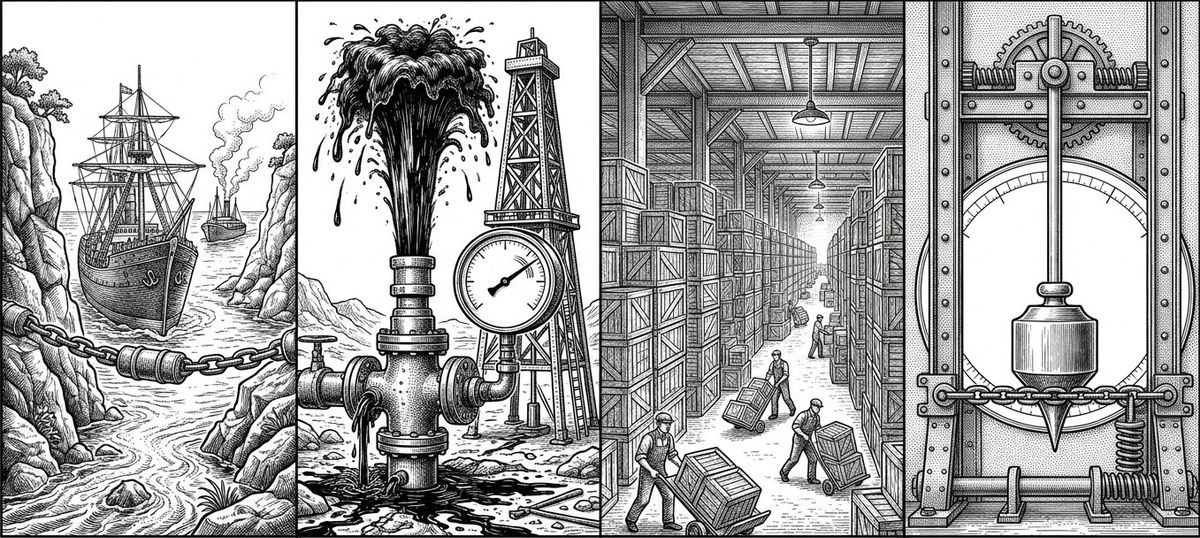
Houthi drones struck two Saudi oil tankers in the Red Sea on Wednesday, part of a declared blockade against Riyadh. The United States ran a twelfth straight night of strikes on Iran.
Oil answered within hours. West Texas Intermediate settled at $92.19 on Thursday and Brent crossed $100 for the first time since May. Transits through the Strait of Hormuz fell to fifteen on Wednesday, against roughly 130 a day pre-war.
Friday brought a retreat on reports of renewed talks, with WTI at $89.31, still up more than 8% on the week.
A blockade does not destroy demand. It moves the cost of meeting that demand onto everyone downstream.
▪️ CAPITAL BACKBONE
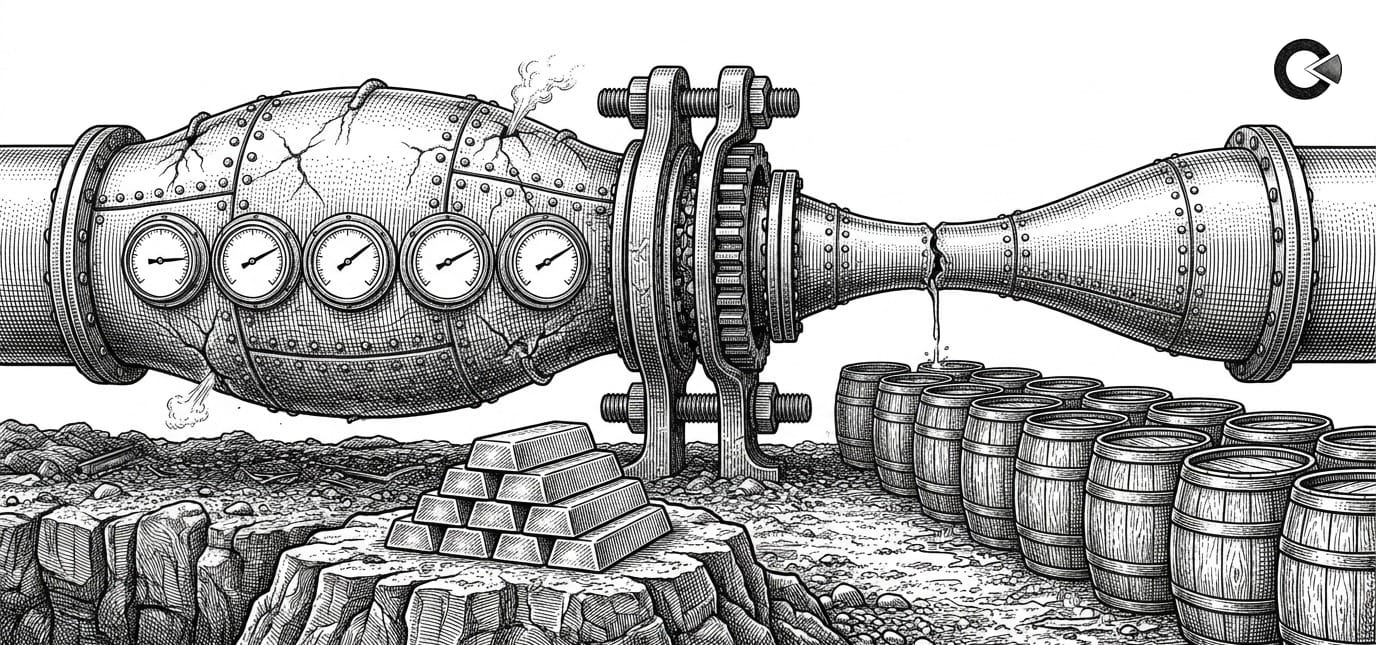
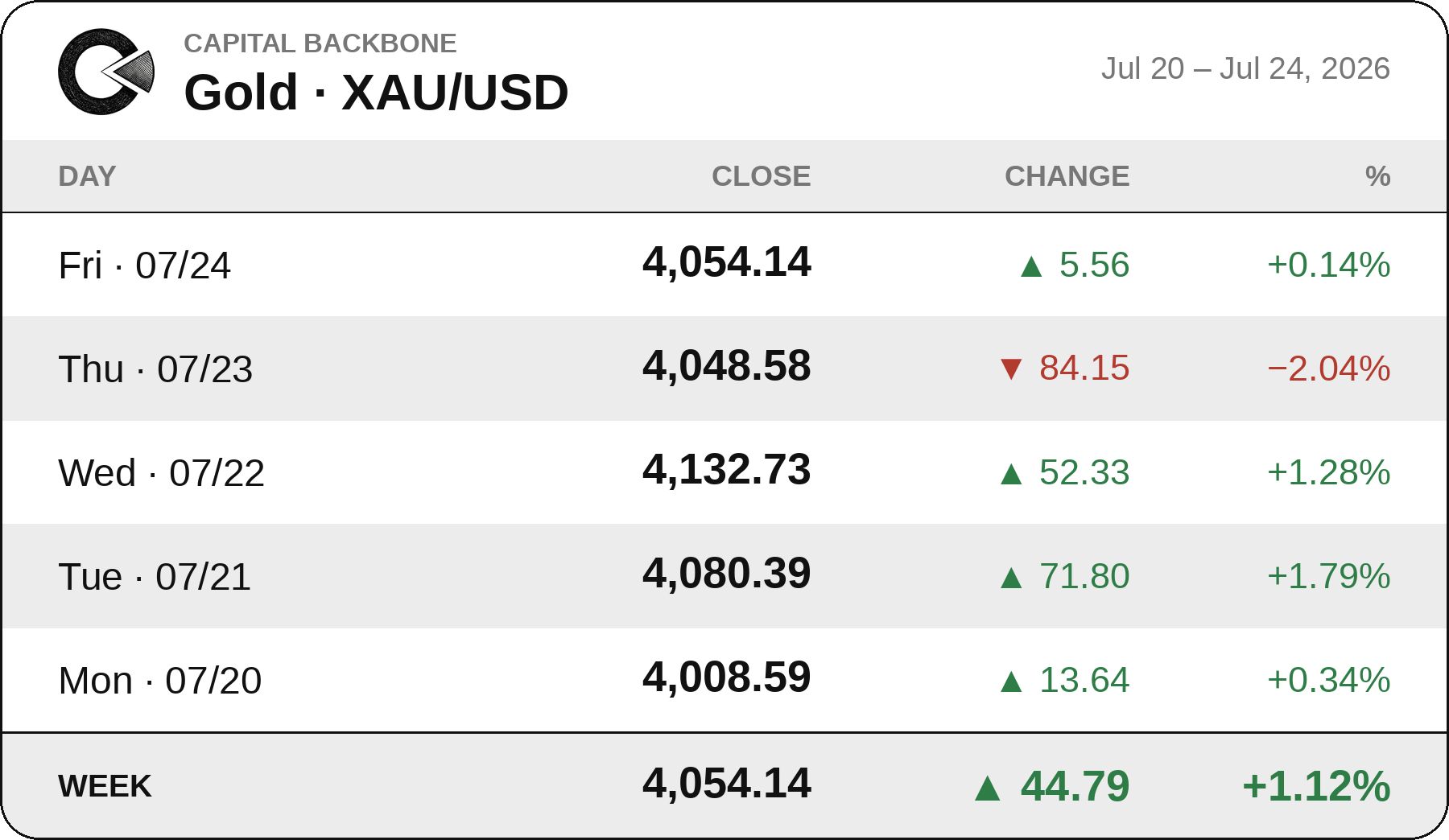
Gold built through the week. Monday closed at $4,008.59, Tuesday added 1.79%, and Wednesday reached $4,132.73. Thursday consolidated to $4,048.58 and Friday closed at $4,054.14, up 1.12% on the week with the floor holding above four thousand throughout.
Silver moved harder in both directions, rising 4.39% on Tuesday to $58.83, easing to $57.57 on Thursday, then finishing at $58.22, up 4.00% on the week.
The structural note is where the money went. The Philadelphia Gold and Silver Index, which tracks the miners, closed at 312.89 against 295.80 the previous Friday, a gain of 5.78%. Producers outran the metal, which is what capital does when it rotates rather than hides.
▪️ STRUCTURAL ANALYSIS
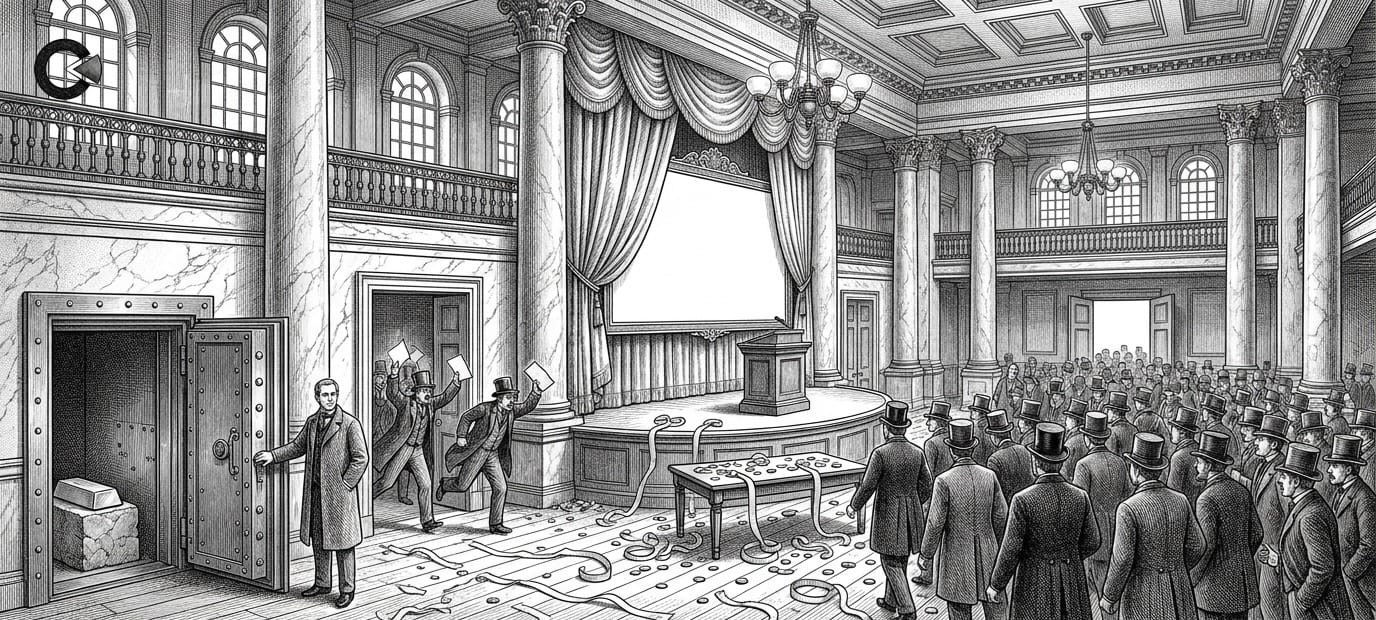
The hard version: Lockheed Martin reported earnings of $7.94 a share against a $7.09 consensus and sales of $20.06 billion, then raised its full-year outlook. Its total order backlog reached $230.4 billion, up 38.4% on the year, with $2.92 billion of free cash flow in the quarter. In the same week two of the largest technology companies beat on revenue and were sold hard, because their capital spending is rising faster than the cash it returns.
Plain language: One kind of company is being paid now for work already ordered. The other is spending now for revenue that arrives later, if it arrives at all.
The Federal Reserve rules on Wednesday whether that spending stays expensive to finance.
▪️ INDEX BEARINGS

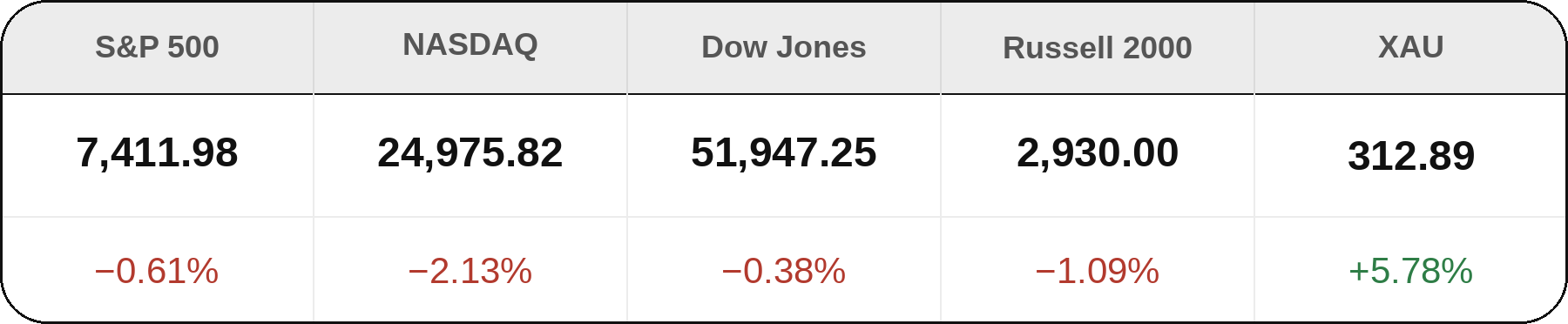
Numbers show each index's close on the week's last trading day. Weekly percentages show the change from the prior week's close.
▪️ WHAT MATTERS / WHAT DOESN'T
What matters: the Fed decides Wednesday.
Economists polled by FactSet expect the central bank to hold its rate at 3.5% to 3.75%, a fifth consecutive meeting without a move.
A hold is the expected answer, so the wording will matter more than the decision. Gasoline reached $4.09 a gallon, up 37% since the war began, and that argues against any hurry to cut.
What doesn't: one day of headlines.
A single report of renewed talks took about 3% off crude on Friday and lifted the names that burn fuel. Not one barrel physically moved differently in that session.
Fifteen ships passed through Hormuz on Wednesday against a normal 130 before the war. That number reshapes freight costs and quarterly earnings long after the headline is forgotten, and it is the one worth writing down.
▪️ MARKET BEARINGS
Lockheed Martin $LMT ( ▼ 0.88% ) Closed at $582.60, up 14.51% on the week after shares rose 10.8% in a single session on Thursday. The order book is signed and the cash is already arriving.
Chevron $CVX ( ▲ 1.0% ) Closed at $194.79, up 3.95% as crude ran toward $92 before easing on Friday. A producer captures a war premium directly, without needing a forecast, a new product, or a promise about next year to justify the move. The barrel reprices on its own.
Delta Air Lines $DAL ( ▼ 1.34% ) Closed at $85.06, up 1.06%, but the path tells the story. It traded down all week on fuel costs, then rose 3.77% on Friday alone when the talks report hit. The same barrel sets both sides of the trade.
Sector | Symbol |
|---|---|
Financials | |
Technology | |
Materials | |
Real Estate | |
Communication Services | |
Consumer Discretionary | |
Energy | |
Industrials | |
Utilities | |
Healthcare | |
Consumer Staples |
▪️ AUTHOR'S LENS
Marcus Grant, The Strategist: I have watched a shipping lane decide a quarter before, and it always surprises the people who model earnings for a living. Fifteen ships through Hormuz against a normal 130 is not a headline. It is a supply chain being rationed in front of us.That is why I want things already dug, already built, already delivered. A promise needs the world to cooperate. A cargo in the hold does not. | 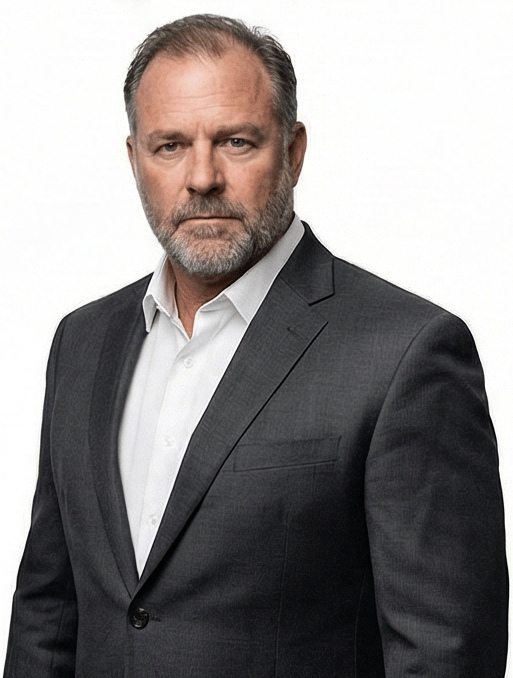 |
 | Susan Price, Founder & Chief Analyst: The numbers sorted themselves this week. Lockheed carries a $230.4 billion backlog and produced $2.92 billion of free cash flow, and the shares gained 14.51%. The mining index rose 5.78% while the Nasdaq gave up 2.13%.Both moves came from the same instinct. Pay for what exists. |
▪️ PAST ISSUES