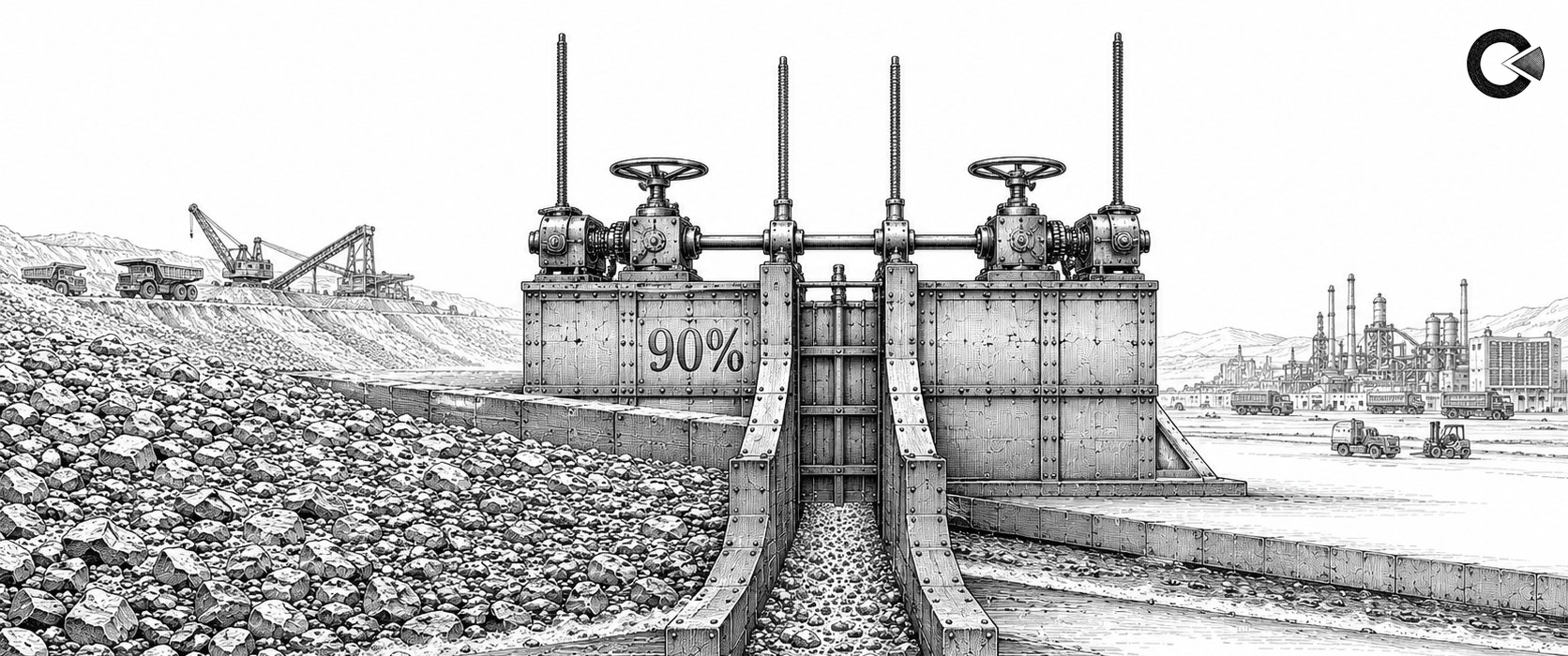
▫️ How China built a 90% chokehold on rare earth refining
Mining new deposits takes years. Building a working refinery takes a decade. The math favors whoever already owns one.

▫️ THE CORE TOPIC
For a century, the industrial economy ran on who owned the mine. Copper in Chile. Iron in Australia. Oil in Texas. Control the raw source, control the chain.
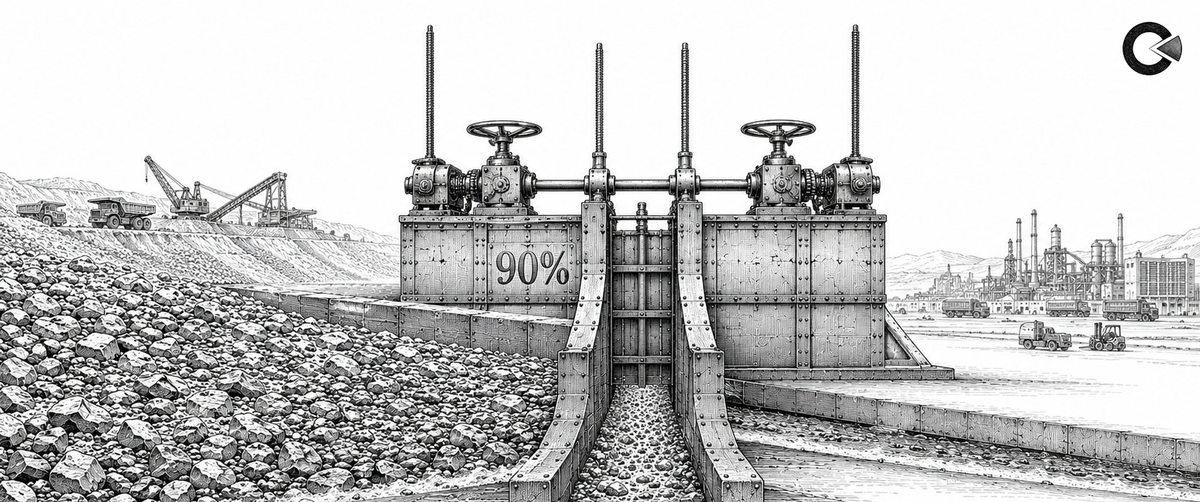
That model broke. The choke point moved to the middle of the supply chain. ASML in the Netherlands holds the only working extreme ultraviolet lithography machines. China refines 90% of the world's rare earths. The mine is global. The refinery is not.
These bottlenecks aren't accidental. They are the product of decades of process chemistry, capital investment, and accumulated specialist labor. Building a replacement takes a decade plus billions of dollars.
When the pitch describes a "way out of the stranglehold," the real question is the same in every choke point: who is funding the replacement, and how close are they to running it at scale.
▫️ THE MECHANISM
The mechanics are simple. The strength comes from where the choke sits in the chain.
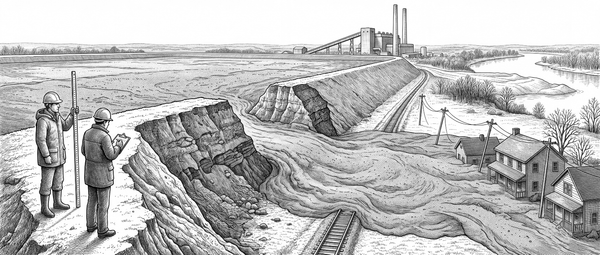
- The capacity gap. Mining new deposits takes years. Building a refinery takes a decade plus billions in environmental and regulatory work.
- The chemistry barrier. Refining rare earths separates 17 elements with near-identical properties. Etching 3-nanometer chips requires equipment from one manufacturer in the Netherlands. The know-how lives in a few facilities.
- The volume tail. A choke point requires sustained demand to stay profitable. Without it, the facility shuts and the trained workforce disperses.
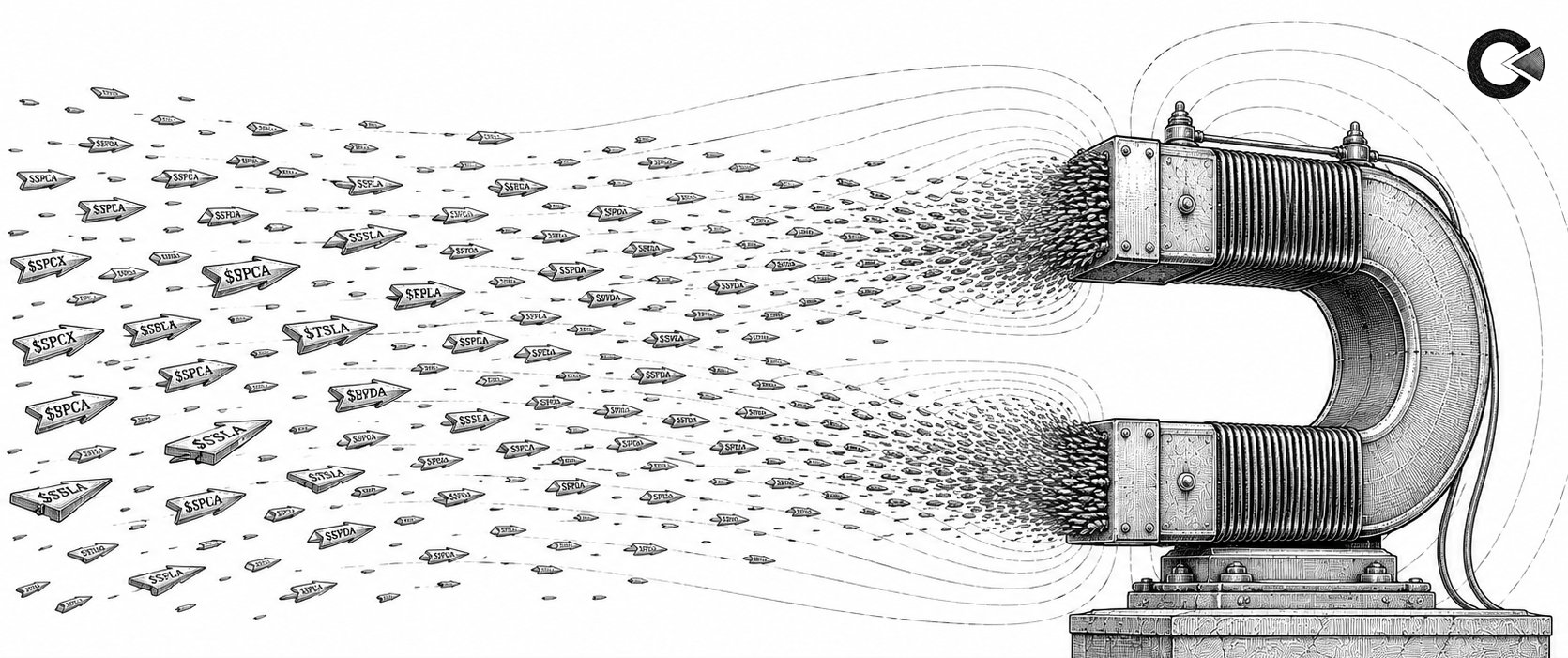
- The capital flag. When the choke point becomes obvious, large allocators move first. Vanguard, BlackRock, and State Street have been adding positions in companies positioned to own Western processing capacity.
Whoever owns the narrow part of the funnel sets the terms.
▫️ THE CASE FILE
In September 2010, a Chinese fishing trawler collided with a Japanese Coast Guard vessel near the disputed Senkaku Islands. Beijing's response was not diplomatic. China cut rare earth exports to Japan within weeks. Prices for some elements rose more than 600%. Japan, which imported roughly 90% of its rare earths from China at the time, scrambled to find alternatives. Japanese industry spent the next decade building inventories, funding alternative supply lines, and partnering with Australia's Lynas Corporation to develop processing capacity outside China. The mine matters. The processing facility decides who lives through the squeeze.
▫️ THE PRESSURE TEST
- Choke points can shift. New refineries take 7-10 years. By then, demand patterns or technology may have changed.
- Substitution erodes value. Engineers find workarounds. Tesla announced in March 2023 it would build its next-generation motor without rare earth magnets.
- Political reversal. Countries can ease restrictions when limits no longer serve them. China has loosened rare earth quotas before.
- Capital intensity. Building refining capacity requires substantial upfront spending with uncertain payoff timelines.
Structure-aware investors don't bet on a single choke point. They study which facilities are being built, who owns them, and how long the cycle has to run before competition arrives.
▫️ AUTHOR'S LENS
I've watched this pattern for forty years. In 1987, the choke point was Japanese memory chips. In 2008, it was the housing finance plumbing under AIG. In every cycle, the squeeze happens somewhere narrow that nobody was watching.Today the squeeze sits in Chinese refineries. Tomorrow it sits somewhere else. The skill is not predicting the next bottleneck. It is recognizing the shape of one when you see it.Build the structure. Ignore the noise. |  |
▫️ PAST ISSUES