Five hundred thousand customers waited four weeks and were told to bear it.

 |
 |
Susan Price & Marcus Grant September 28, 2026 |
THE SHORT VERSION |
|
• A switching office with nobody inside it. • The same signal meant a fire or nothing. • Thirty-eight minutes passed before anyone called the fire department. • Every line was back four weeks later. |
THE SETUP |
|
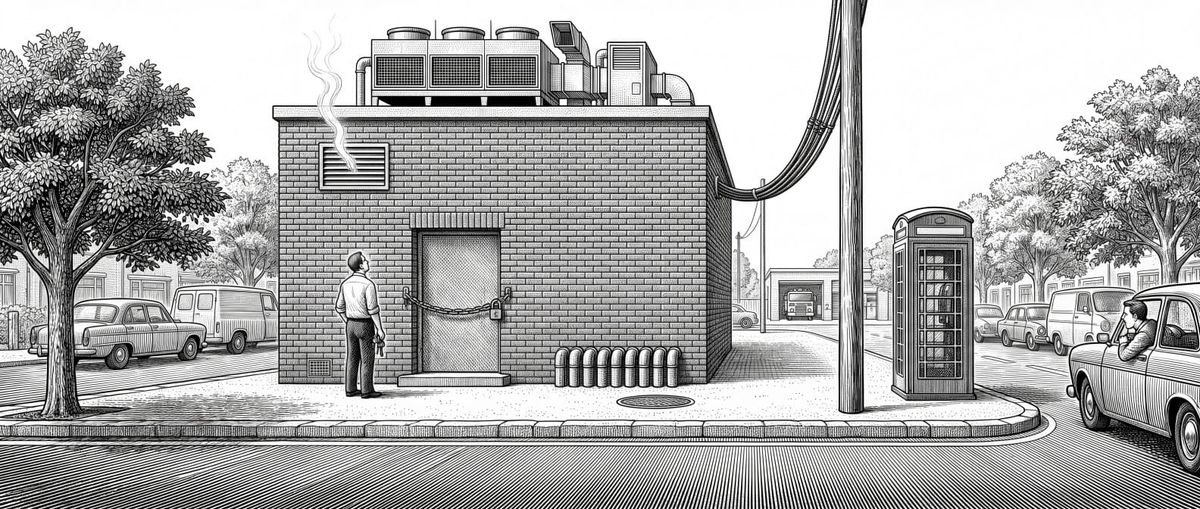
Brent is near $106 this morning after the White House turned down an Iranian proposal on the Strait of Hormuz, and one waterway is setting the terms for everyone who uses it. On May 8, 1988 a suburban building outside Chicago was doing the same job for the telephone network. The Hinsdale central office served 41,455 local lines of its own, which was the small part of it. It was also the gateway through which local, long distance and cellular traffic was routed for the fibre network across the western suburbs, O'Hare and Midway among them. Nobody worked in the building. It was watched from a monitoring centre in Springfield, at the other end of the state, and technicians called roamers drove out when something needed doing. That arrangement was ordinary in 1988 and it worked. The building had smoke detection, and the detection worked on the day. What it did not have was a way of telling the difference between two things at once. |
THE TIMELINE |
|
Every row below comes from one document, the joint final report on the office, published in March 1989 by the Office of the State Fire Marshal and the staff of the Illinois Commerce Commission. Its investigators worked from the alarm logs, the switch records, the fire department entries and interviews taken over more than six weeks. Read the 3:50 row. A fire alarm trouble signal is what the building sends when commercial power is interrupted and the generators pick up, and the wiring sent a fire alarm signal alongside it every time. It activated at 3:50, cleared at 3:53, activated at 3:59 and cleared at 4:00. By the time a real one arrived at 4:20 the operator had already been taught what those signals meant. |
THE BREAK |
|
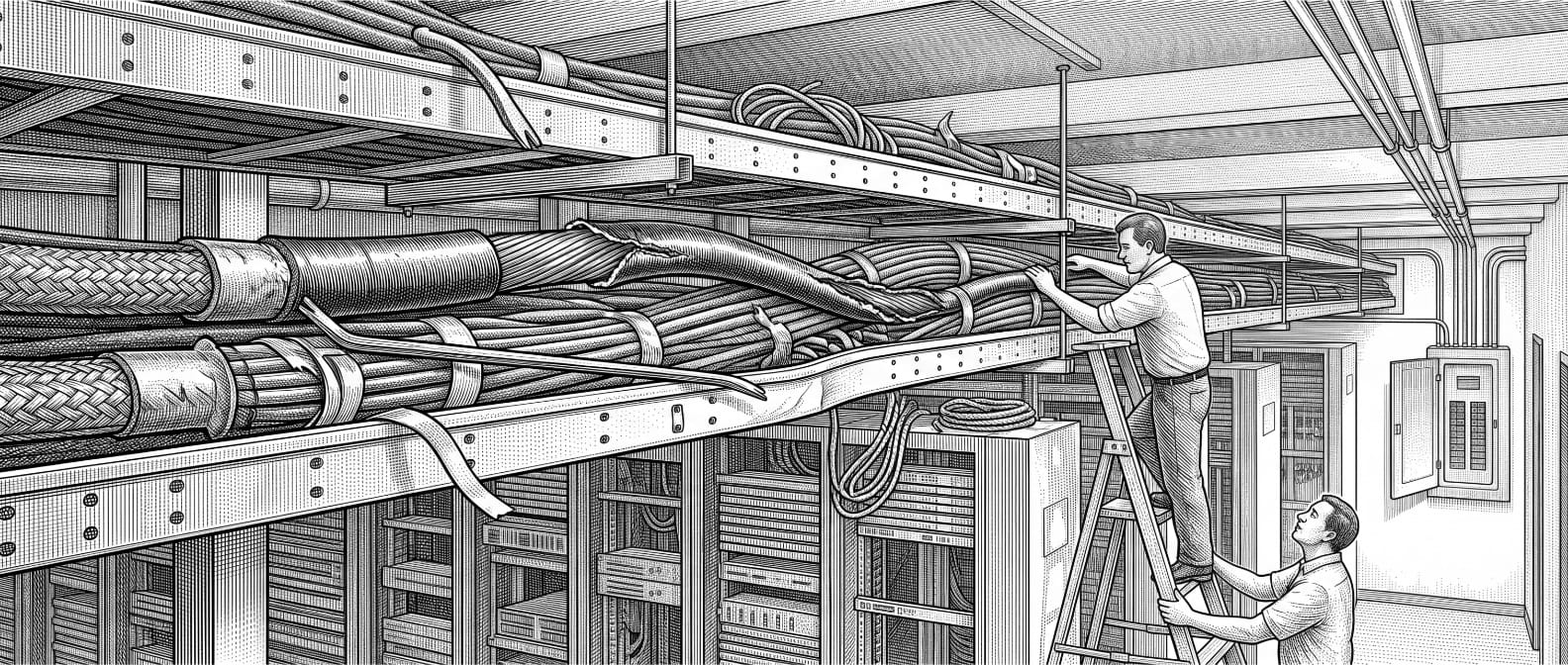
Four things decided this, and the fire itself was the last of them. • One signal for two different events. The wiring sent a fire alarm signal every time a trouble signal went out, and a trouble signal is what a routine power interruption produces. The report says those signals could lead to misinterpretation and delay. • The number nobody dialled. At 4:20 the operator in Springfield had a genuine fire signal in front of him. Operating procedures told him to call the Hinsdale Fire Department. He called the duty supervisor instead. • The building was empty. Nobody was in the office that afternoon. The report is careful about this: a person inside would probably not have smelled it sooner, but would have reported it sooner. • Everything that could report it ran through it. At half past four the duty supervisor tried two fire departments and both lines were out of order. The technician who arrived at 4:52 found the lobby telephone dead and his cellular telephone out of service, and stopped a passing motorist. |
WHO PAID |
|
Local service stopped for 38,000 customers in Hinsdale, Clarendon Hills and Willowbrook. Voice and data were affected for more than five hundred thousand residential and business customers across the western suburbs. Police, fire and hospital lines were restored first. A new switch was diverted from another telephone company and put in. 19,500 lines moved across on May 26, and the rest on June 5, four weeks after the fire. Until then the traffic was rerouted around Hinsdale and a microwave link was strung to the LaGrange switching centre. The customers themselves got nothing. They brought it as a class action, and in 1994 the state supreme bench affirmed that they could not be made whole in tort for what the month had done to them, because the tariff Illinois Bell had on file with the Commerce Commission said so. |
THE PATTERN |
|
• One signal for two states is no signal. An indicator that fires on a routine event and on a real one teaches the watcher to ignore it. • The procedure existed and was not followed. Illinois Bell had written down that the local fire department gets the call. Written down is where it stayed. • The reporting path ran through the thing that was burning. Two fire departments, a lobby telephone and a cellular telephone were all on the network that had stopped. • Nobody in the building is a decision. It is usually the right one. It shows up only on the afternoon when detecting and reporting are thirty-eight minutes apart. I once worked a floor where runners were the backup for the phones, and nobody had asked what they were to do if the lifts stopped. Before trusting any arrangement that reports on itself, find the one path the report travels and ask what happens when that path is the thing that has gone. A bar of gold in a drawer reports nothing; opening the drawer is the whole of the audit. |