Five boxes marked empty went into the hold of a Miami flight.

 |
 |
Susan Price & Marcus Grant September 27, 2026 |
THE SHORT VERSION |
|
• Five boxes of used oxygen generators, marked empty. • About 138 of them had never been fired. • The flight lasted a little over ten minutes. • The inspection system was still unfinished six years later. |
THE SETUP |
|
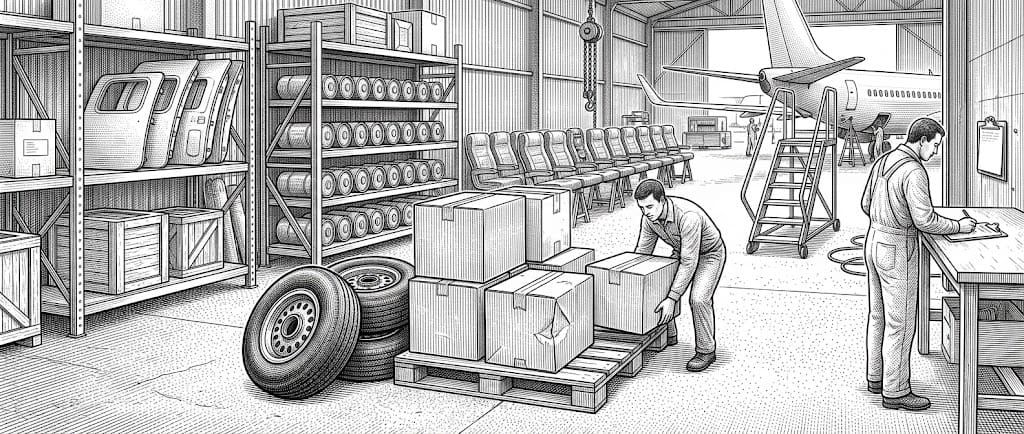
On May 11, 1996 a DC-9 left Miami for Atlanta with 4,109 pounds of cargo aboard. Among it were two main tyres and wheels, a nose tyre and wheel, and five cardboard boxes. The shipping ticket described the boxes as Oxy Cannisters - Empty. ValuJet was three years old and growing fast. It owned no maintenance base of its own and contracted the work out, in this case to a repair station in Miami that had been stripping oxygen generators out of three other aircraft. The generators come out when they pass their service life. They are not empty. Each one is a sealed canister that makes oxygen by burning a chemical charge, and it gets hot doing it. Everything about the arrangement looked ordinary. The work card called for a safety cap over the firing pin of every generator removed. After the accident the FAA evaluated the airline and found deficiencies across its maintenance, including its handling of the contractors doing the work. |
THE TIMELINE |
|
Every row below comes from one document, the accident report on flight 592, published by the National Transportation Safety Board. Its investigators worked from the cockpit tape, the flight data recorder, the air traffic control tapes, the shipping ticket and interviews with the mechanics and the ramp crew. Read the 1404:24 row. At that moment everything was normal and the decision that mattered had already been taken on the ground, at the ramp, when a ticket that said empty was shown to the first officer and neither man discussed it. The aircraft was serviceable and the crew did everything asked of them. Nothing in the next ten minutes could reach back and change what was in the hold. |
THE BREAK |
|
Four things decided this, and none of them happened in the air. • The cap that was not in the building. Work card 0069 called for a safety cap over the firing pin of each generator removed. A supervisor told a mechanic the shop had none. The mechanics were on twelve-hour shifts seven days a week, and the card was signed anyway. • A word on a ticket instead of a check. About 144 generators came off two aircraft. Six were reported as already fired. For the other 138 there was no record either way, and the five boxes went out described as empty. • The ramp agent asked and nobody answered. The lead ramp agent showed the shipping ticket to the first officer and asked to load the boxes forward. Neither discussed the word empty on it. • What followed took years. The review that came out of it was the catalyst for a new oversight system, introduced in October 1998. Six years after the accident the Inspector General told Congress it was still not operating as intended at the ten carriers where it began. |

WHO PAID |
|
Both pilots, the three flight attendants and all 105 passengers were killed. The aircraft reached the Everglades about ten minutes after takeoff, and the report puts the sequence at under four minutes from the first sound on the tape. The airline itself was evaluated straight after and the FAA found deficiencies across its maintenance and its handling of contractors. The agency budgeted $54,800,000 over two years for the corrective work and added 146 inspectors and 74 support staff in one year. The rest of it took much longer. Thirty-one recommendations came out of the review. Nine were complete by March 1998 and twelve of the remainder were already past their dates, nine of those by a year or more. The report on that system was still finding it unfinished in 2002. |
THE PATTERN |
|
• A label is not an inspection. The word empty was written by someone who had not looked. Everyone downstream treated it as a fact rather than as an assertion. • The missing part was the smallest one. A plastic cap over a firing pin is the smallest object in the story, and the only one that was not there. • Work sent out is still work owned. The airline had no shop of its own and no engineering capability in its maintenance programme. What it contracted out it stopped watching. • The question nobody asked out loud. A ticket was shown, an approval was given, and the one word on it that mattered went undiscussed. I signed off on a counterparty list in the 1990s because the name at the top was a firm everyone knew, and the four below it went unchecked. Before accepting a description of something out of sight, ask who wrote it and what they did to find out. A bar of gold answers that by weighing; most things answer it with a piece of paper. |