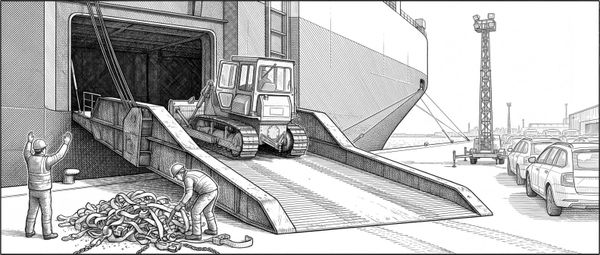
▪️ Eight Ships Crossed Hormuz in a Day. Before the War It Was 130.
Americans spent $763.6 billion in July, and equities finished the week almost exactly where they started.
▪️ THE ENTRY POINT
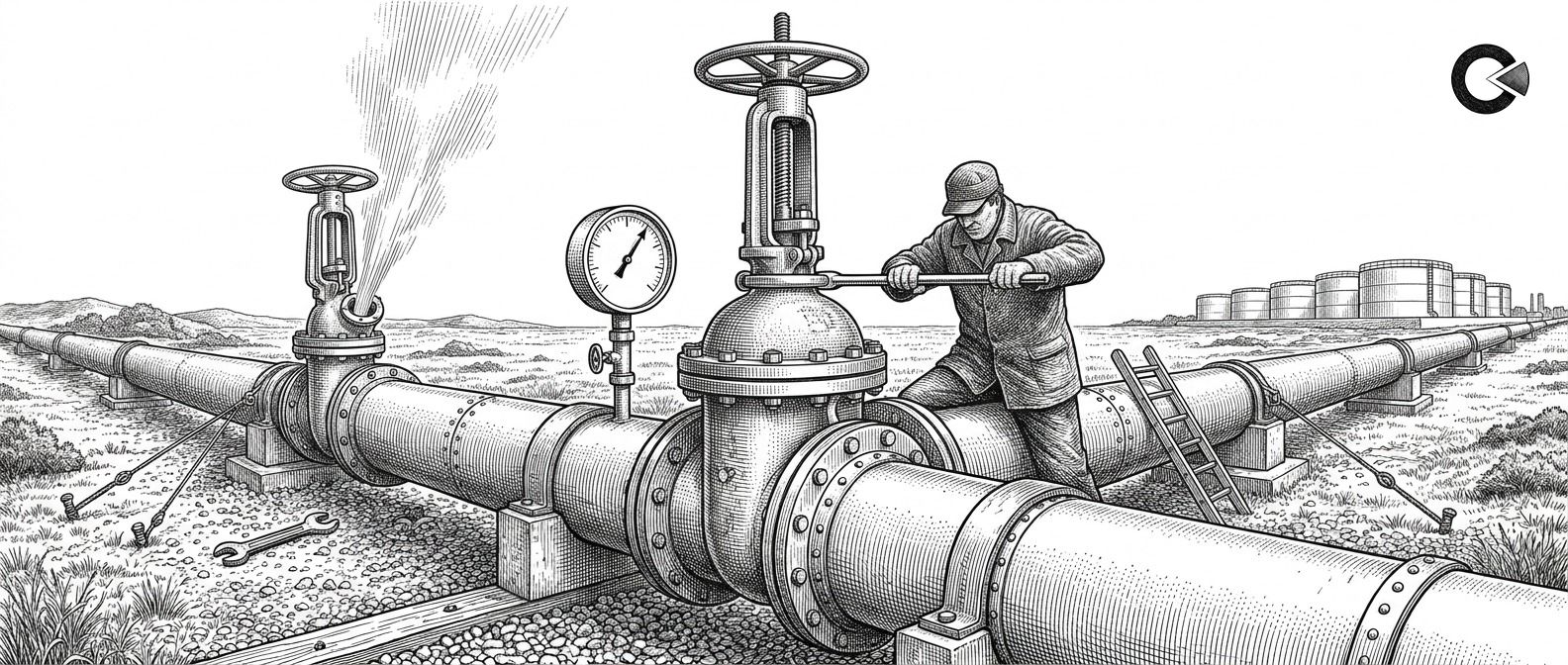
The market spent the first week of August pricing a reopening of the Strait of Hormuz. It spent this one taking that back.
Crude climbed about 5% to close at $82.13 on Monday alone, as confidence drained that Washington and Tehran would agree terms. West Texas Intermediate ended the week at 82.40, up 5.40 percent, having fallen 7.67 percent the week before.
Nothing about the strait changed physically in five sessions. What changed was the assumption that it would open on a schedule.
Gold read it as it usually does. The metal held above 4,300 every day of the week and closed higher again.
▪️ CAPITAL BACKBONE
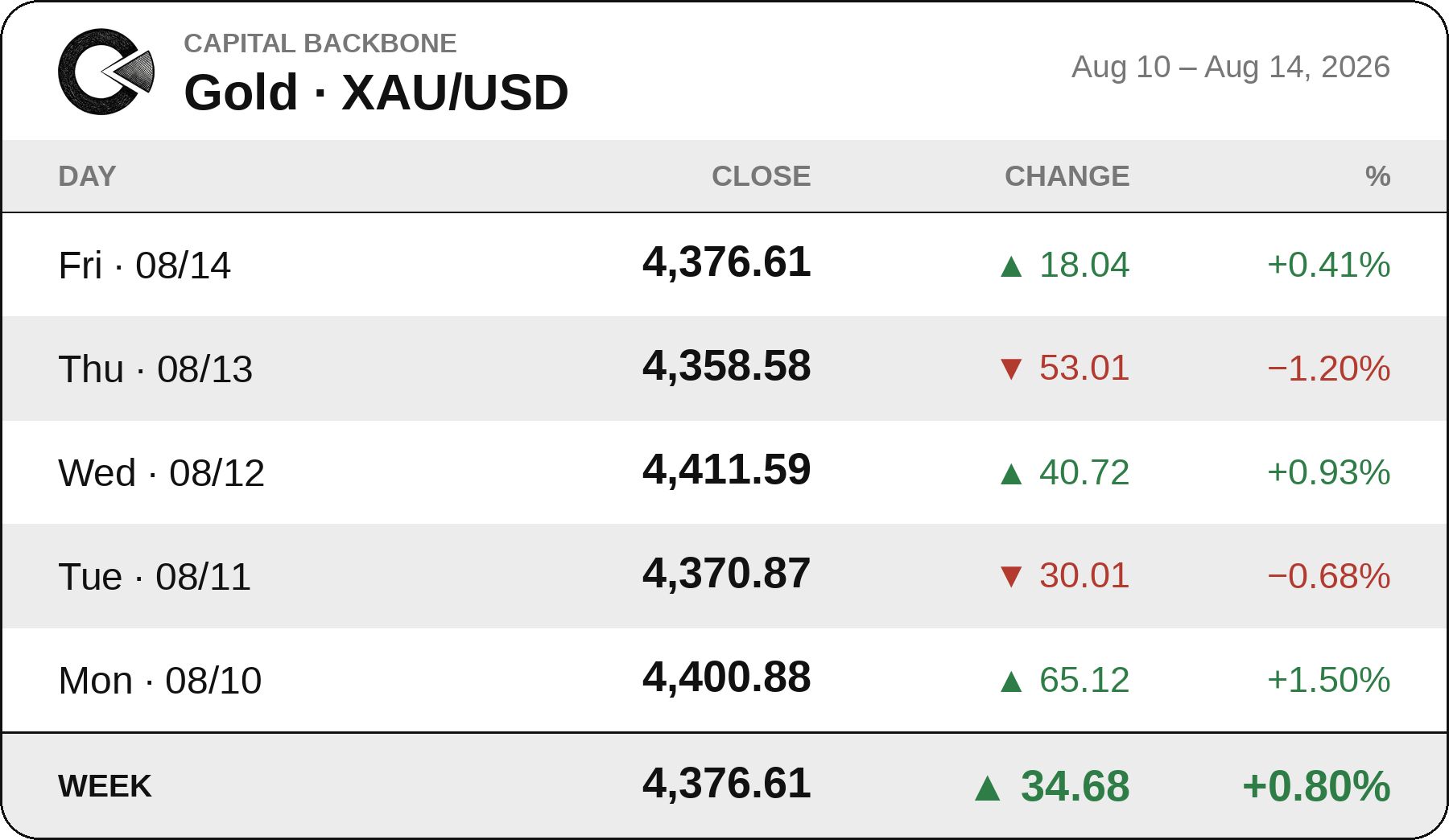
Gold closed Friday at 4,376.61, up 18.04 on the day, a gain of 34.68 on the week and 0.80 percent. That follows the previous week's 7.47 percent advance, so this was consolidation at a higher level rather than a new push.
The range tells the story better than the close. Wednesday reached 4,411.59, Thursday saw a correction, and the floor held above 4,350 into Friday.
Silver finished at 64.69 for a 1.78 percent week. The Philadelphia Gold/Silver Index closed at 370.47, up 0.52 percent, which is a modest week for the miners after their 19.70 percent run and exactly what a base looks like while it forms.
▪️ STRUCTURAL ANALYSIS
The hard version: Iran's foreign minister said the waterway would not reopen until Washington met conditions, including easing sanctions and paying war reparations. Ship tracking put transits at eight to fifteen vessels a day in early August, against roughly 130 before the conflict.
Plain language: an agreement to manage the strait is not the same thing as an open strait. One is a document, the other is traffic, and only the second moves a barrel.
For anyone holding hard assets, the sequence is the useful part. A premium came out of oil on an expectation and went back in on a condition, twice inside ten sessions, while the metal simply held its level through both.
▪️ INDEX BEARINGS

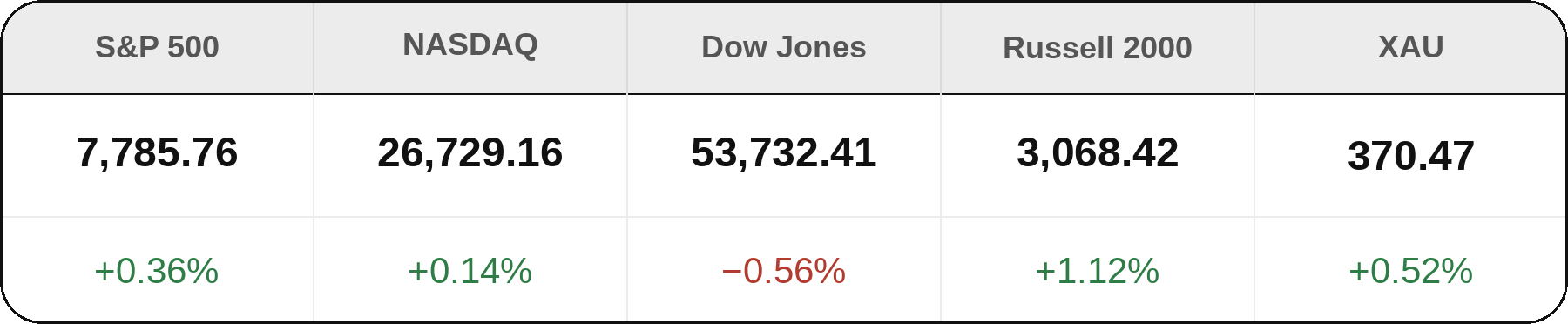
Numbers show each index's close on the week's last trading day. Weekly percentages show the change from the prior week's close.
▪️ WHAT MATTERS / WHAT DOESN'T
What matters: the American consumer stepped back in July.
Retail and food services sales came in at $763.6 billion, down 0.6 percent from June, the sharpest monthly fall in more than a year, though still 5.0 percent above July 2025.
Producer prices were flat on the month and ran at 4.7 percent over twelve months. Softer demand alongside cooling input costs is a very different picture from softer demand alongside rising ones, and the difference decides how much room policy actually has this autumn.
What doesn't: the S&P 500's quiet week.
The index added 0.36 percent to 7,785.76 and the headline writes itself as calm.
Underneath, the Dow lost 0.56 percent while the Russell 2000 gained 1.12 percent, a spread of nearly two points between the largest American companies and the smallest. Money moved a good deal this week. The average simply hid where it went.
▪️ MARKET BEARINGS
Exxon Mobil $XOM ( ▼ 0.06% ) The shares closed Friday at 160.10, up 4.61 percent as crude recovered. The barrel and the equity moved together all week, which is what happens when the mover is price rather than demand. Volumes did not change. The price of what came out of the ground did.
United Airlines $UAL ( ▼ 1.62% ) Down 3.26 percent to 125.34 over the same five sessions. The barrel that lifted the producer sits in the cost line of the carrier, and jet fuel is the second largest expense an airline carries after labour.
Newmont $NEM ( ▼ 3.14% ) Up 4.23 percent to 117.76 while gold added 0.80 percent and the mining index 0.52 percent. A producer outrunning both the metal and its own sector is telling you something about the company rather than the commodity.
▪️ AUTHOR'S LENS
Marcus Grant, The Strategist: I have watched a lot of war premiums come out of a price and go back in. What is unusual here is the speed. Two full reversals in ten sessions, on statements rather than events.The metal did none of that. It held above 4,300 in every single session while the barrel argued with itself, and that steadiness is the whole case for owning it. |  |
 | Susan Price, Founder & Chief Analyst: The numbers that matter this week were not in the indices. Retail sales at minus 0.6 percent, producer prices flat, crude up 5.40 percent.That combination puts pressure on margins from the input side while the buyer steps back on the other. I am watching whether next month's sales figure confirms the consumer or corrects him. |
▪️ PAST ISSUES