▫️ America's Emergency Oil Reserve Just Hit Its Lowest Level Since 1983.
The United States has withdrawn 352 million barrels in four years, and the tanks now sit far from full.
▫️ THE CORE TOPIC
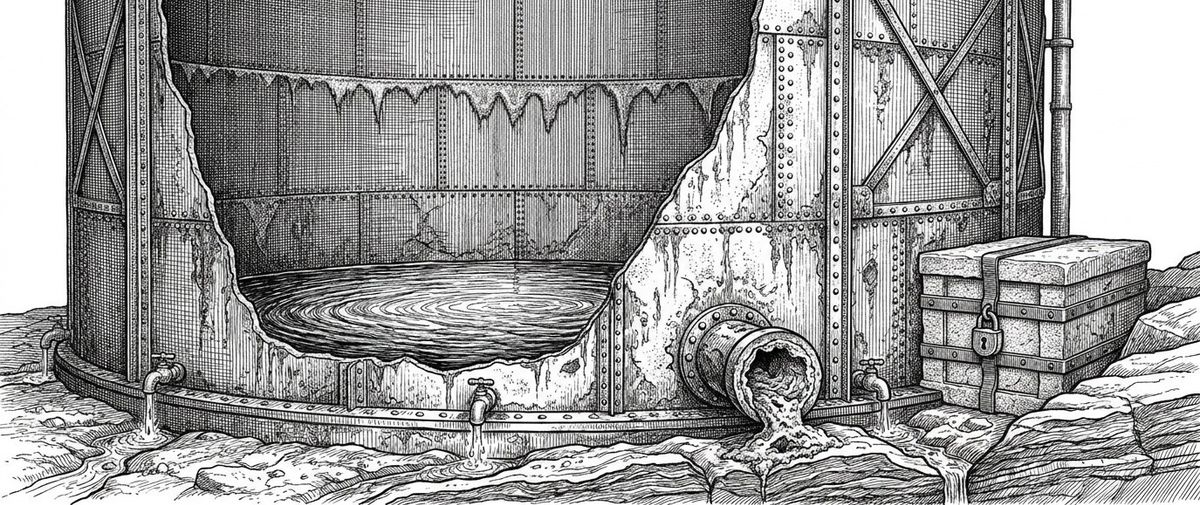
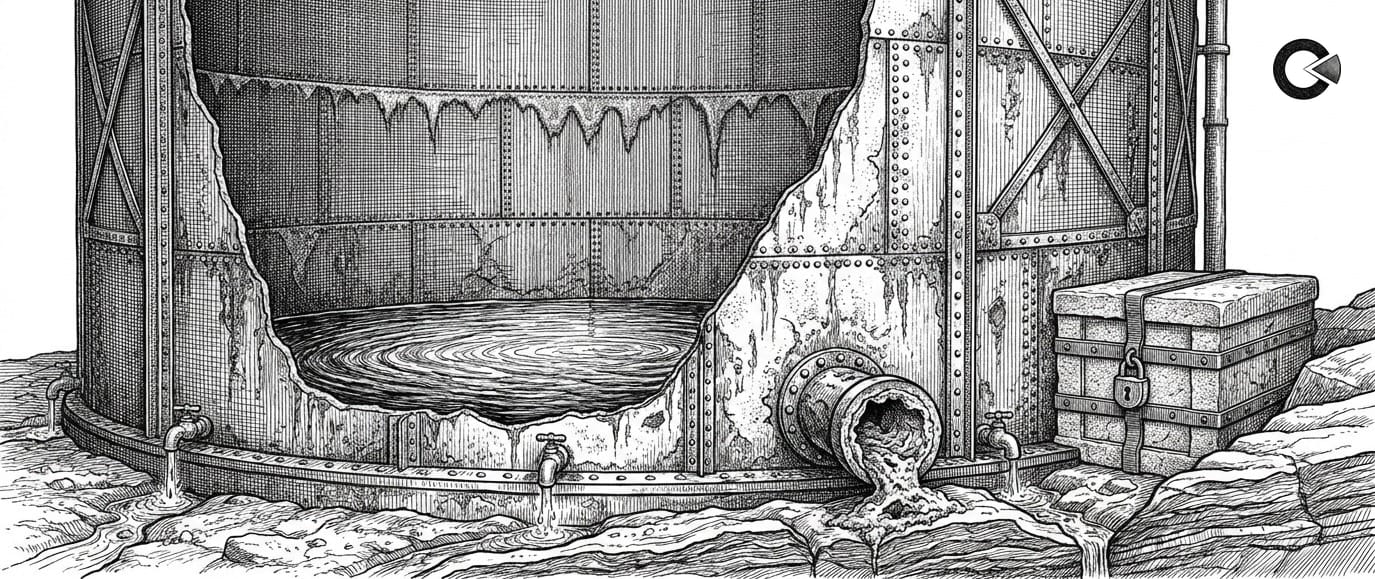
A buffer is the least glamorous thing any institution owns. It earns nothing, it sits still, and its whole purpose is to be there on the day everything else fails. That is precisely why it tends to disappear.
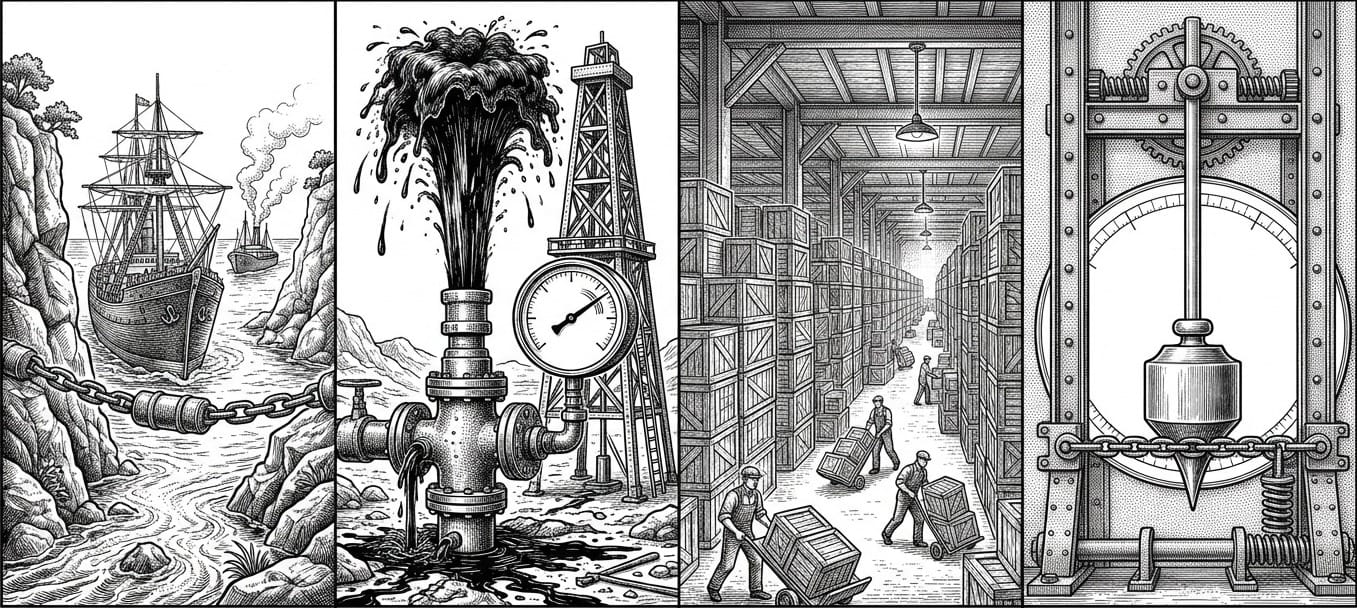
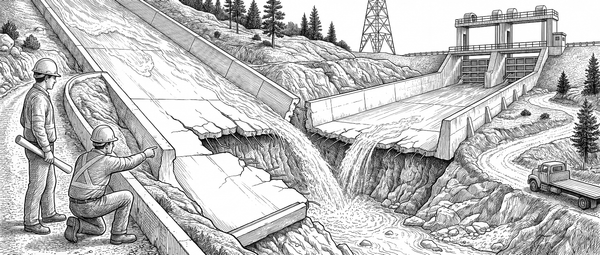
The pattern is visible right now in the American emergency oil stockpile. The United States has withdrawn 352 million barrels over four years to soften supply shocks, leaving the reserve at its lowest since March 1983 against an authorised capacity of 714 million barrels. Federal auditors also found that more than a quarter of it was not available for drawdown, because the pumps and pipes have aged. Strained power systems and utilities asking customers to cut usage are the same story in a different industry: the cushion gets used first and rebuilt last.
There is a lesson here for a private balance sheet. A reserve is only a reserve while it is untouched and while it can actually be moved when needed.
▫️ THE MECHANISM
A reserve erodes through a sequence that repeats everywhere.
- It is spent on comfort, not crisis. Buffers get tapped to smooth an inconvenient price rather than to survive a genuine shortage, and each small withdrawal feels reasonable at the time.
- Refilling is always postponed. Buying back is a cost with no visible reward, so it slips down the list until the next emergency arrives with the tank still low.
- Deliverability decays out of sight. Maintenance of the pipes, vaults, and systems that release a reserve gets deferred, so the recorded amount stays high while the usable amount falls.
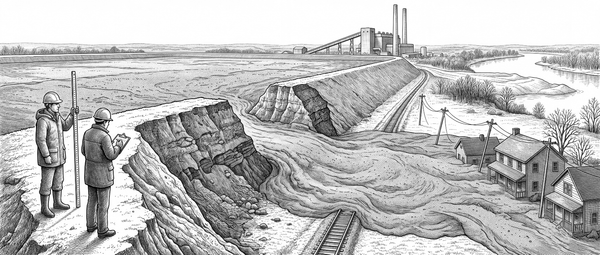
- The headline hides the real exposure. What actually threatens a portfolio during a conflict is rarely the event being reported, but the buffer it drains and the input costs it raises for years afterward.
The number on the ledger is the promise. Deliverability is the reality.
▫️ THE CASE FILE
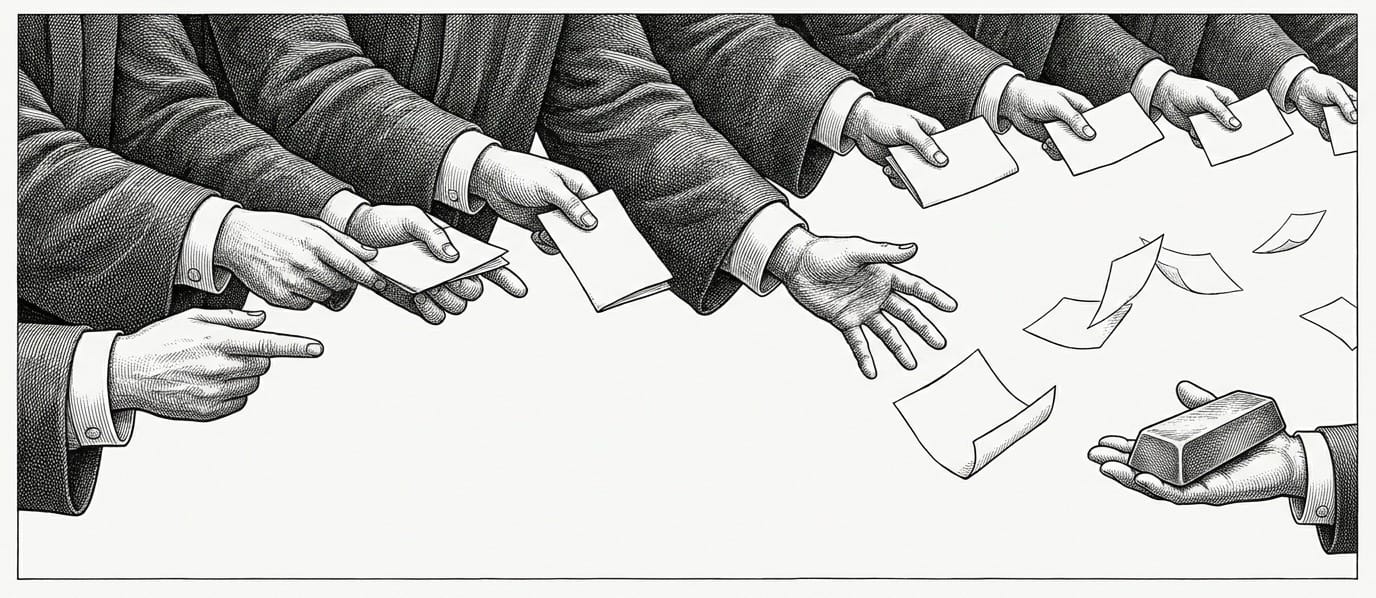
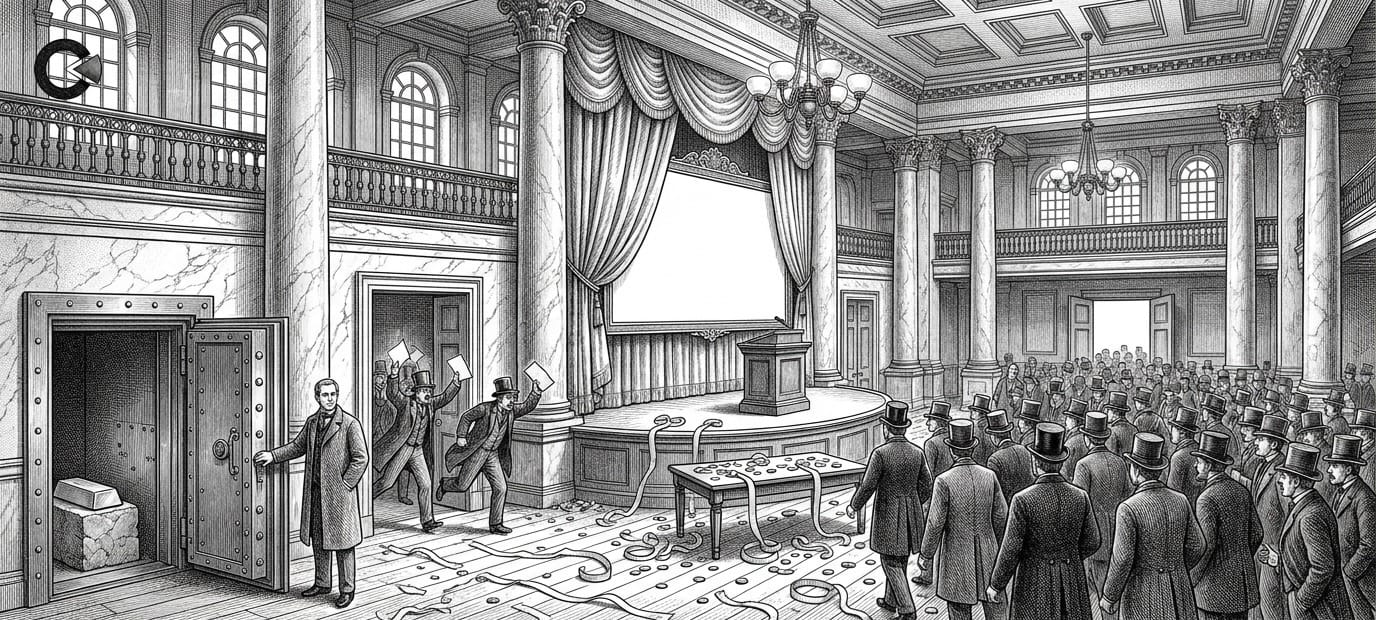
Britain shows what happens when a buffer is released at the wrong moment. In May 1999 the Treasury announced it would auction off a large share of the nation's gold, with the metal then trading near $282 an ounce.
Announcing the sale in advance told every buyer exactly what was coming, and the price sank before the auctions even began. Between 1999 and 2002 the United Kingdom sold 395 tonnes at roughly $275 an ounce, raising about $3.5 billion.
Gold today trades above $4,000. That reserve was not lost to a crisis. It was handed over deliberately, at close to the worst possible moment, because holding it looked pointless while everything was calm.
▫️ THE PRESSURE TEST
- Buffers do have a cost. Capital held in reserve earns little, and that drag is real across years when nothing goes wrong.
- Releases can work. Drawing on a stockpile genuinely eases a shock, and the American releases did cushion fuel prices for a period.
- Too large a buffer is its own mistake. Holding excessive idle capital means missing the compounding that funds everything else.
- Rebuilding takes discipline nobody rewards. Refilling happens in quiet years, which is exactly when the argument for it sounds weakest.
The judgement is not whether to hold a reserve but what to hold it in. Something that keeps its worth across decades, needs no counterparty, and can be moved on a day's notice earns its place in the tank.
▫️ AUTHOR'S LENS
Every trader I knew who survived a bad decade had one thing in common. They kept a reserve they never intended to use, and they were mocked for it in the good years. The mockery always stopped at the same moment.What I hold back is not a bet. It is the reason I never have to sell a good position at a terrible price. Ounces sitting still and doing nothing have paid for themselves in every crisis I have traded through.Build the structure. Ignore the noise. |  |
▫️ PAST ISSUES