▪️ America Just Got a Stagflation Warning
The jobs number, the oil price, and the tariff wall landed together. That combination has a name.
THE ENTRY POINT
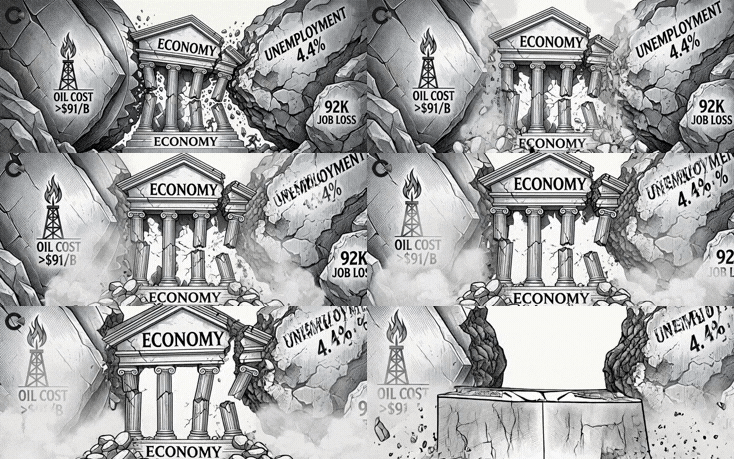
On March 6, the Bureau of Labor Statistics confirmed that nonfarm payrolls fell by 92,000 in February, while unemployment climbed to 4.4% from 4.3%. Health care jobs dropped on strike activity. Federal government employment continued to trend down. Labor force participation fell to 62.0%. Oil held above $91 per barrel on continued Iran conflict escalation. Two forces pressed at once: rising energy costs and collapsing employment. That is the stagflation signal.
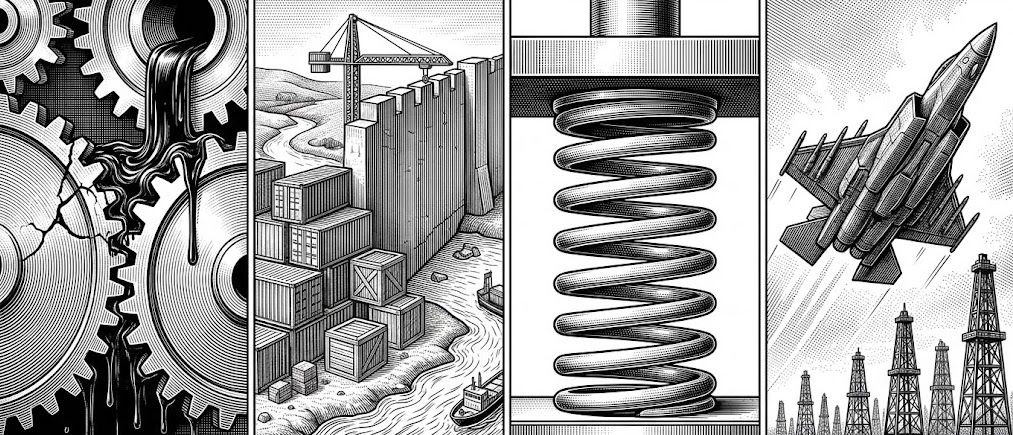
That signal traps the Fed. Cutting rates now risks feeding an oil-driven inflation fire. Holding steady risks accelerating the labor market breakdown. There is no clean move. This is not dramatic - it is geological. Two opposing pressure systems grinding against each other until the structure beneath gives way.
STRUCTURAL ANALYSIS
Complex: On March 3, the executive invocation of Section 232 national-security authority and IEEPA emergency powers formally activated a 25% ad valorem tariff on all USMCA-covered merchandise from Canada and Mexico, with concurrent elevation of Section 301 tariff rates on specified Chinese harmonized-schedule product lines from 10% to 20%, generating projected bilateral trade-flow disruptions in gross merchandise value estimated north of $900 billion annually and triggering immediate retaliatory measures from Ottawa on $155 billion in US goods.
Simple: Here is what that means in practice. As of March 3, everything entering the US from Canada, Mexico, and a wider range of Chinese categories became 20-25% more expensive at the border. That cost flows directly into cars, lumber, electronics, and food before any business adjusts its model or any shopper sees a receipt. Higher input costs for producers mean higher prices downstream. The tariff wall is now the new cost floor.
INDEX BEARINGS

S&P 500 | NASDAQ | Dow Jones | Russell 2000 | XAU |
|---|---|---|---|---|
6,740.02 | 24,643.02 | 47,501.55 | 2,525.30 | 413.39 |
-2.0% | -1.3% | -3.0% | -4.1% | -12.1% |
Numbers show Friday market close. Weekly percentages show week-over-week change.
CAPITAL BACKBONE
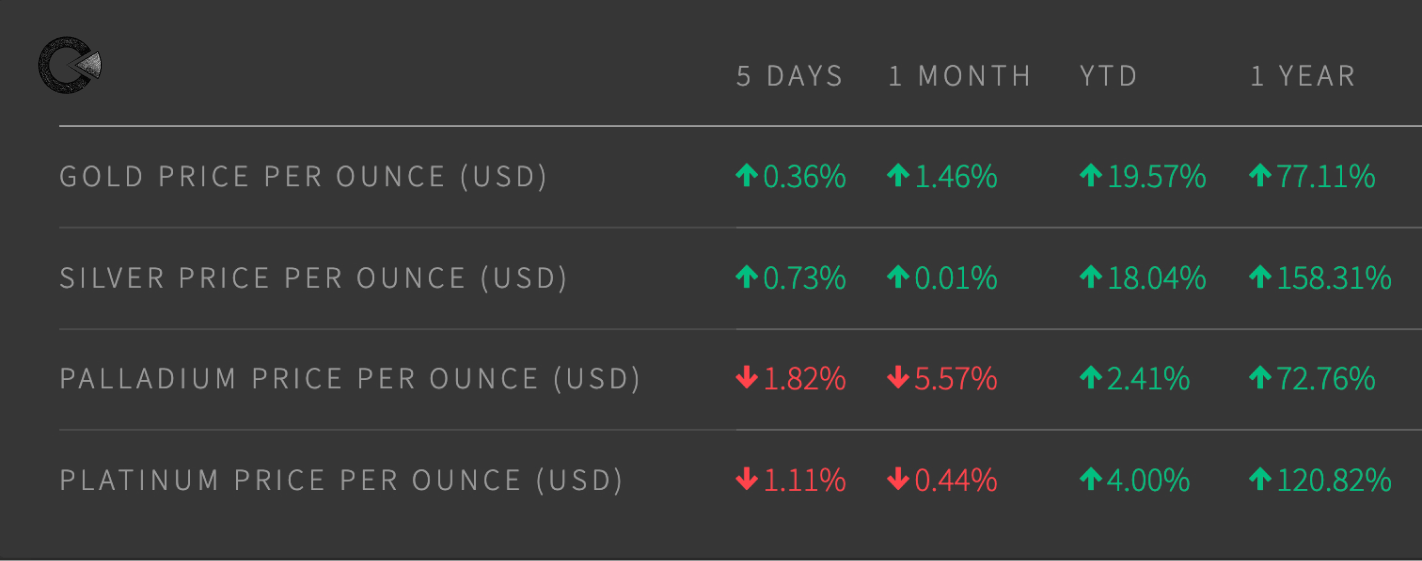
Gold opened the week at $5,384 per ounce, still carrying the late-February war premium from the US-Iran strikes, then retreated to the $5,080-$5,170 range by Friday as dollar strength and rising Treasury yields compressed that premium. The 10-year yield closed the week at 4.14%, up 19 basis points - adding short-term friction to gold's path without touching its structural base.
Silver tracked a sharper correction, falling from $95.71 at Monday's open to $82-84 per ounce by Friday, as the gold-silver ratio widened back toward 62. The move reflects momentum traders reducing exposure after a fast run, not a structural break. The $75-$80 support zone held. Both metals remain inside the same long-term trend - the correction compressed the spring, it did not break it.
WHAT MATTERS / WHAT DOESN'T
What matters. The February jobs report matters. Employment fell 92,000 and unemployment hit 4.4% as oil held above $91 per barrel. The Fed now sits in a position where every available policy tool carries a meaningful cost.
What does not matter is the argument that weather and strikes distorted the numbers. Both were real factors. But unemployment still rose and labor participation still dropped to 62.0%. Structural signals do not wait for cleaner seasonal data.
What matters. The confirmed 25% tariff on Canada and Mexico matters. These two countries represent the largest share of US import flows. Every manufacturer sourcing from either country now operates on a permanently higher cost base - before any price adjustment reaches the end customer.
What does not matter is which specific product categories secure temporary exemptions. Tariff carve-outs are narrow, political, and short-lived. The structural shift is the new cost floor. The exceptions are the fine print, not the signal.
MARKET BEARINGS
Boeing, Inc. $BA ( ▼ 0.57% ) - Bloomberg reported on Friday that Boeing is nearing a deal for up to 500 737 MAX jets and 100 widebody aircraft with Chinese airlines, timed to Trump's March 31 state visit to Beijing. The stock jumped 4% on the report. This would be Boeing's largest Chinese order in nearly a decade and positions commercial aircraft as an active card in the US-China trade negotiation.
Chevron Corporation $CVX ( ▲ 1.0% ) - Chevron hit an all-time high as Brent crude surged above $90 per barrel on escalating US-Iran tensions. Energy was the only S&P 500 sector to close the week in positive territory. When geopolitical supply risk reprices in real time, energy functions as a structural hedge inside the equity stack - a pattern this cycle has now confirmed across multiple consecutive weeks.
Lockheed Martin Corporation $LMT ( ▼ 0.88% ) - Defense names surged as the US expanded its Persian Gulf military presence following the Iran strikes. Lockheed Martin climbed nearly 6% for the week. Capital moved away from software and discretionary names into the physical infrastructure of sustained conflict - a rotation that repeated for the second straight week and reflects a durable shift in how this market prices geopolitical risk.
Sector | Symbol |
|---|---|
Financials | |
Technology | |
Materials | |
Real Estate | |
Communication Services | |
Consumer Discretionary | |
Energy | |
Industrials | |
Utilities | |
Healthcare | |
Consumer Staples |
AUTHOR'S LENS
 | Susan Price: The jobs report, the tariff wall, and the oil spike are not three separate stories this week. They are one geological shift viewed from different angles. The Fed has no clean response to stagflation. Predicting its next move is less useful than positioning in assets that hold value regardless of how the pressure breaks. That discipline - not forecasting - is the only edge that survives a week like this one. |
Marcus Grant: Gold's retreat from $5,384 to $5,080-$5,170 is decompression, not reversal. The Iran war premium bled off as markets shifted from shock-pricing to sustained-conflict-pricing. Boeing jumping sharply on a China deal, Lockheed Martin climbing 6%, Chevron at an all-time high on oil above $90 - three moves, one pattern: capital rotating from software into steel, from consumption into production. The physical world is repricing faster than the financial one. |  |
QUOTE OF THE DAY
“In war, you win or lose, live or die - and the difference is just an eyelash.”
General Douglas MacArthur